

Amazon Grocery Enriched Unbleached Bread Flour (5 lb) Review: Everyday Bread Flour for Home Bakers
Introduction
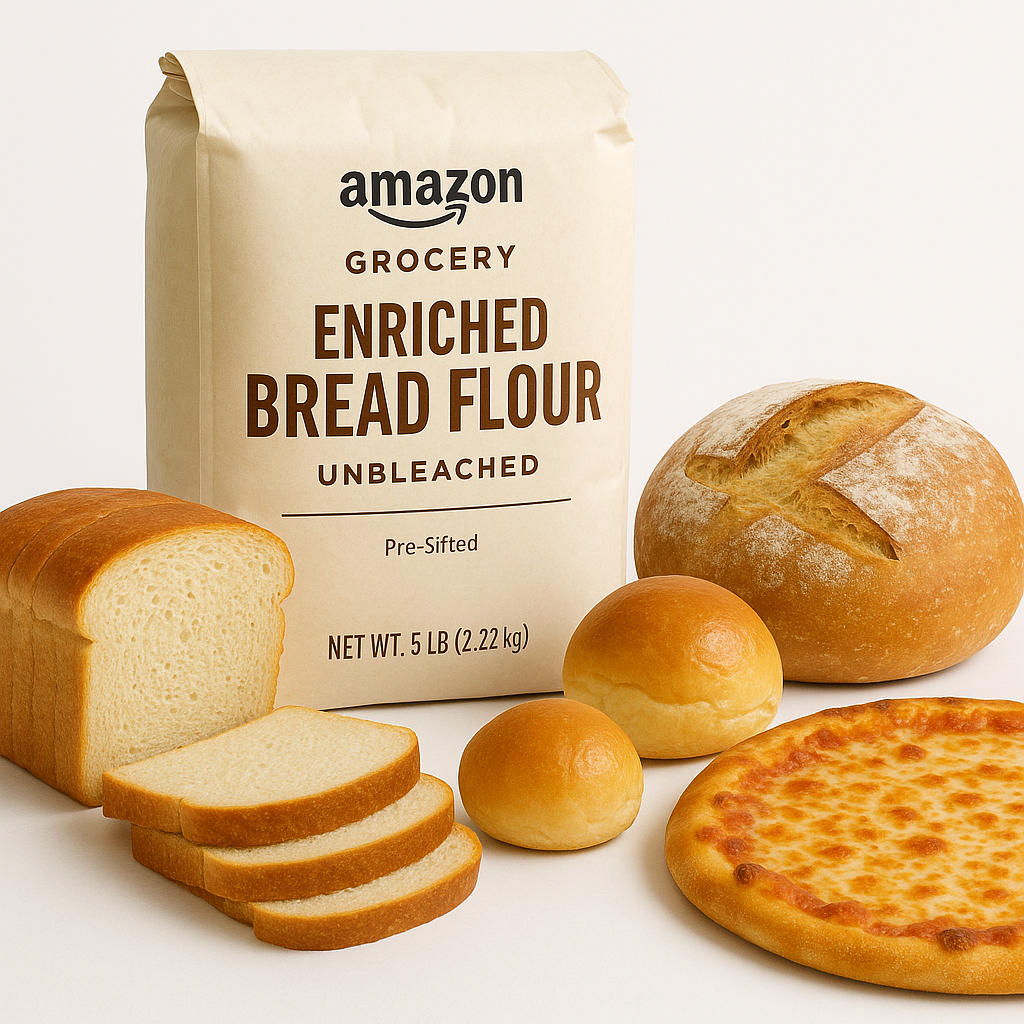
Amazon Grocery Enriched Bread Flour, Unbleached (5 lb) is a private‑label bread flour positioned as a practical, everyday option for home bakers who want reliable structure and rise in yeast‑based recipes. Sold in a standard 5‑pound bag, it is enriched, pre‑sifted, and made specifically for bread applications like pizza crust, sandwich loaves, and dinner rolls.
Compared with generic all‑purpose flour, this bread flour is formulated with a higher protein level (typical for bread flour) to support stronger gluten development. That translates into better chew, more open crumb, and improved volume in most yeast doughs, especially when kneaded properly and baked to full doneness.
From a value standpoint, this flour is frequently priced competitively in the bread‑flour category, especially when bundled with Amazon promotions or Subscribe & Save, often landing around $2.72 for a 5 lb bag depending on current offers and discounts.
Typical Use Cases
Because it is an unbleached, enriched bread flour, this product is best suited to recipes that benefit from strong gluten structure and a robust rise. Typical uses include:
-
Everyday sandwich bread
Ideal for soft or medium‑crust sandwich loaves baked in a standard pan. -
Pizza dough and flatbreads
Commonly used for New York–style or thin‑crust pizzas, as well as focaccia and other chewy flatbreads. -
Dinner rolls and buns
Great for slightly enriched doughs with milk, butter, and sugar where you still want structure and height. -
Artisan loaves and rustic bread
Can be used for lean doughs like boules, bâtards, and batards baked in Dutch ovens or on stones. -
Bread‑machine and stand‑mixer recipes
Works well with automated kneading, where high‑protein flour supports consistent gluten formation. -
Hybrid recipes (bread + all‑purpose)
Often combined with all‑purpose flour to adjust chewiness and crumb structure in custom formulas.
Performance in Each Scenario
1. Everyday Sandwich Bread
When used in standard sandwich bread recipes (with water or milk, a bit of fat, and sugar or honey), this flour generally produces:
- Good oven spring thanks to strong gluten development.
- Fine to medium crumb that slices cleanly without excessive crumbling.
- Moderate chew that is more substantial than all‑purpose flour loaves but not overly dense when dough hydration and proofing are correct.
The unbleached character contributes to a more natural off‑white color versus very bright white bleached flours, and crust color typically develops well under normal baking times.
2. Pizza Dough and Flatbreads
For pizza dough, the higher protein level is a major advantage:
- Stretchability: The dough stretches more confidently, reducing tearing when properly rested.
- Chewy texture: Baked crusts have a pleasantly chewy bite with enough structure to support toppings.
- Open crumb: With adequate fermentation (cold fermentation in the fridge for 24–72 hours), you can achieve a more open, airy rim.
Flatbreads like focaccia and sheet‑pan pizzas also benefit from the flour’s strength, yielding good lift and a structured crumb that holds olive oil and toppings without collapsing.
3. Dinner Rolls and Buns
In enriched doughs (butter, eggs, or milk), this flour supports:
- Tall, well‑domed rolls that hold their shape.
- Soft interiors when enough fat and hydration are present.
- Resilient crumb that springs back after light pressure, important for burger and sandwich buns.
Because bread flour absorbs slightly more liquid than typical all‑purpose, recipes may require minor hydration adjustments (adding a small amount of water or milk) to avoid overly stiff dough.
4. Artisan and Rustic Loaves
For free‑form loaves, this flour can deliver:
- Crisp crust with good caramelization when baked on a stone or in a preheated Dutch oven.
- Strong structure that helps dough hold shape during final proofing, especially at higher hydration.
- Chewy, robust crumb that works well for toasting and sandwiches.
While it can’t replicate the nuance of some specialty bread flours (such as those formulated for very high hydration or stone‑milled heritage grains), it offers enough strength and consistency for most everyday artisan‑style bakes.
5. Bread Machines and Stand Mixers
In bread machines and stand mixers, consistency is critical. This flour performs reliably in:
- Standard white and whole‑wheat blend recipes, where bread flour adds lift and structure.
- Dough cycles for pizza or rolls, where kneading is automated and gluten development needs to be predictable.
Most machine recipes written for “bread flour” can be followed directly with minimal adjustment, though monitoring hydration during the first few minutes of mixing is still recommended.
Strengths Across Scenarios
-
Versatility for bread‑focused baking
This flour covers a wide range of yeast‑based recipes—from daily sandwich loaves to pizza and rolls—making it a convenient pantry staple. -
Unbleached and enriched
The unbleached processing appeals to bakers who prefer less‑processed flour, while enrichment helps replace some nutrients lost in milling. -
Reliable gluten strength
Typical of bread flour, the protein content supports strong gluten networks, resulting in:- Better volume and oven spring
- Improved chew and structure
- Less risk of collapsing loaves when fermentation and shaping are done correctly
-
Pre‑sifted convenience
Being pre‑sifted simplifies measuring and mixing, reducing clumps and helping with more uniform dough hydration. -
Value and availability
As an Amazon private‑label product, it is usually:- Priced competitively versus brand‑name bread flours
- Widely available online
- Frequently included in promotions, coupons, or Subscribe & Save, which can bring the effective cost down to around $2.72 per 5 lb bag depending on timing and discounts.
-
Good all‑around texture
Across different recipes, users can expect a consistent balance of chew, softness, and structure when doughs are mixed, proofed, and baked correctly.
Limitations Across Scenarios
-
Not a specialty flour
This is a general‑purpose bread flour, not tailored for:- Extremely high‑hydration artisan loaves (e.g., 80%+ hydration sourdough)
- Whole‑grain baking where higher ash and bran content are desired
- Pastries, cakes, or very tender baked goods requiring low protein
-
Limited suitability for delicate baked goods
Because of its higher protein level, this flour can make:- Cakes and muffins tougher than intended
- Cookies chewier than recipes written for all‑purpose flour anticipate
For these recipes, an all‑purpose or low‑protein flour remains a better choice.
-
Slight learning curve for hydration
Bakers switching from all‑purpose flour may initially find their doughs feel drier or stiffer, requiring:- A small increase in water or other liquids
- Longer mixing or kneading times to fully develop gluten
-
Brand and source transparency
As a private‑label product, detailed information about wheat varieties and milling processes is limited compared with some premium bread flours. Bakers who prioritize origin tracking and milling specifics may find this lack of detail a drawback. -
Best for thoroughly cooked products only
The flour is intended to be thoroughly cooked before eating and should not be consumed raw. Recipes that involve partially cooked flour or raw‑flour components (such as certain edible cookie‑dough treats) require additional safety steps (like heat‑treating flour) before use.
Verdict
Amazon Grocery Enriched Bread Flour, Unbleached (5 lb) is a practical, budget‑friendly option for home bakers who primarily make yeast‑based breads, rolls, and pizza dough. It delivers reliable gluten strength, good rise, and a balanced crumb suitable for everyday baking, while its unbleached, enriched formulation appeals to those who prefer a straightforward, no‑frills bread flour.
If you are looking for a single, versatile bread flour to keep in your pantry for sandwich loaves, pizza nights, and soft rolls—and you value competitive pricing around $2.72 for a 5‑pound bag—this Amazon private‑label flour is a solid, workhorse choice. Bakers seeking highly specialized performance for advanced artisan techniques or ultra‑delicate pastries will still want additional flours on hand, but for most routine bread baking, this product offers dependable results with broad recipe coverage.