

SEREED Baby Balance Bike Review: A Stable First Ride for 1-Year-Olds
Overview
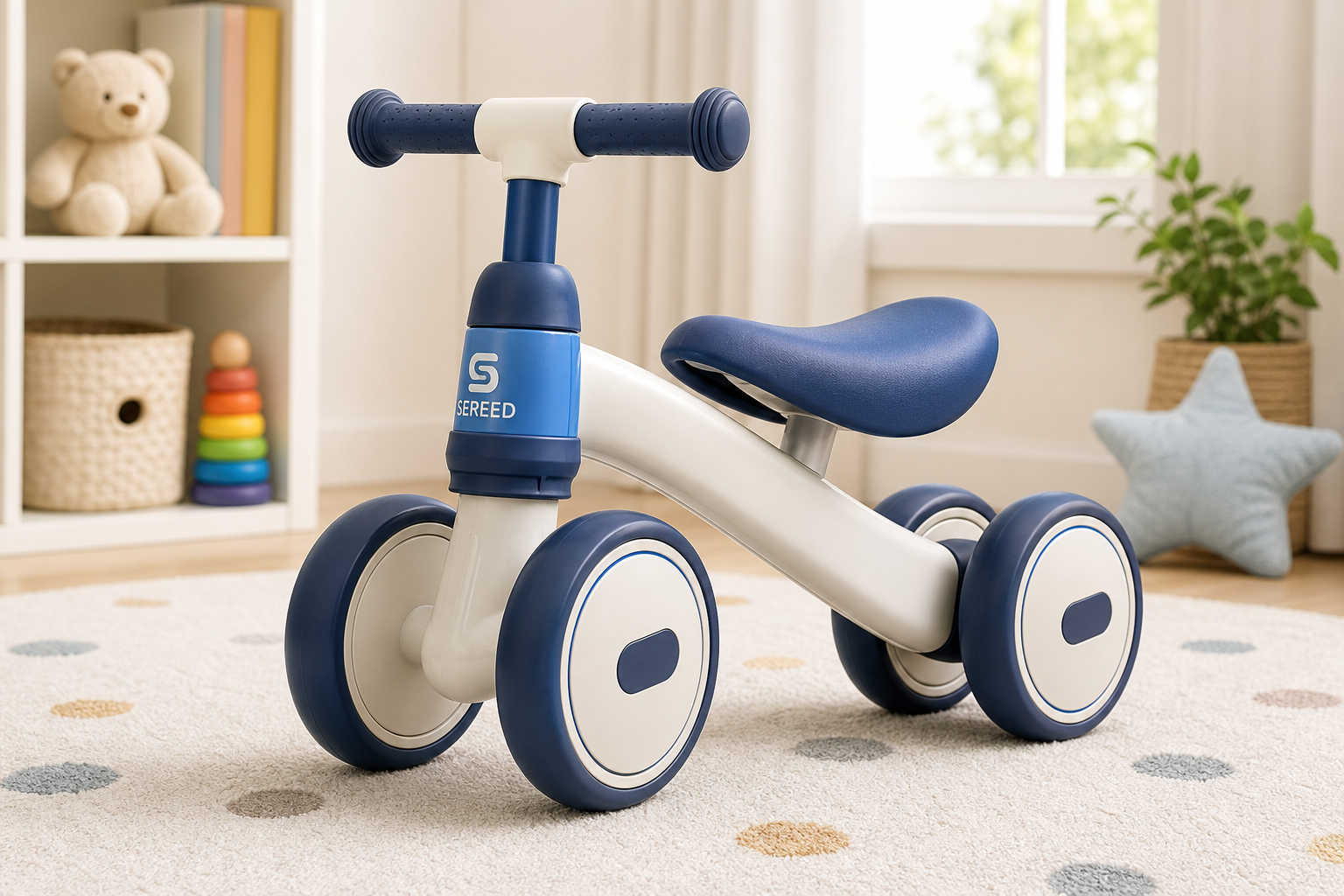
The SEREED Baby Balance Bike for 1 Year Old Boys and Girls (12–24 Months) is a compact, four-wheel toddler bike intended as a first riding toy for babies just starting to walk and explore. It is a no-pedal, push-along bike that toddlers propel with their feet on the ground, prioritizing stability and safety over speed.
Built with a lightweight frame, wide wheelbase, and fully enclosed wheels, this model targets parents who want a gentle introduction to ride-on toys before moving up to larger two-wheel balance bikes. On Amazon (ASIN B08SGH7NKX), it typically sits in the entry-to mid-level price range for baby balance bikes, often around $36.99, depending on color and promotions.
Key Highlights
- Designed specifically for 12–24 month toddlers as a first bike
- Four-wheel layout for maximum stability at very low speeds
- Pedal-free design encourages scooting, balance, and coordination
- Fully enclosed wheels to reduce the risk of little feet getting caught
- 135° steering limit to help prevent sharp turns and tipping
- Lightweight (around 3.6 lb / 1.6 kg) so parents and toddlers can carry it easily
- Soft, wide saddle-style seat and non-slip handlebars for comfort and control
- Suitable for indoor floors and smooth outdoor surfaces
Core Features
1. Age and Size Targeting
The SEREED Baby Balance Bike is explicitly aimed at 12–24 month toddlers. The low standover height and compact frame are sized so that many 1-year-olds can sit with their feet flat on the floor, providing a secure, confidence-building stance.
- Low seat height appropriate for early walkers
- Recommended for one rider at a time
- Works best for babies who can sit unsupported and have started pulling to stand or walking with assistance
2. Frame and Build Quality
The bike features a sturdy frame (commonly aluminum alloy) combined with plastic components to keep weight low while supporting typical toddler use.
- Rigid enough for everyday play
- Smooth, rounded edges to minimize impact points
- Available in multiple colors depending on the listing and stock
While not designed for high-impact outdoor riding, it feels adequate for its intended use: indoor playrooms, hallways, and smooth patios or driveways under supervision.
3. Wheels and Stability
The most defining element is its four-wheel configuration:
- Dual front and dual rear wheels create a wide contact footprint
- Non-slip, wear-resistant wheels that are gentle on indoor flooring
- Fully enclosed wheel design helps avoid pinching or trapping small feet
This layout makes the SEREED much more stable than a two-wheel balance bike, better suiting hesitant or very young riders who are not yet ready for the demands of balancing independently.
4. Steering and Safety Features
To reduce tip-overs and unintended sharp turns, the bike uses a limited steering angle:
- 135° turning limit—the handlebar can only rotate within a restrained range
- Prevents over-rotation that could cause the bike to jackknife or fall sideways
Combined with the low center of gravity and four wheels, this makes the bike forgiving of clumsy early attempts at steering.
5. Comfort and Ergonomics
Comfort features are tuned to baby-sized riders:
- Soft, wide seat that supports the toddler’s weight without hard pressure points
- Non-slip handlebars with soft grips that are easy for small hands to hold
- Short reach between seat and handlebar, so shorter torsos are not overextended
There is no adjustable seat height on many versions, which simplifies the design but may limit fit as children grow toward the upper end of the recommended age range.
6. Portability and Storage
At around 3.6 lb (1.6 kg), the SEREED is notably light:
- Easy for adults to carry with one hand
- Many toddlers can drag or lift it themselves over short distances
- Compact footprint for storage in a closet or corner
The simple structure also makes assembly straightforward, typically requiring only basic steps such as attaching the handlebars and wheels.
Usage Experience
Setup and Assembly
Most users report that assembly is simple and quick:
- Minimal tools required (often included in the box)
- Major components such as the frame, seat, and wheels typically slot or screw together
- Clear instructions and labeled parts help ensure correct setup
Once assembled, the bike feels coherent and ready for immediate indoor use.
Learning Curve
For many 1-year-olds, this is their first ride-on toy, so expectation management is important:
- Some toddlers may initially just sit and be pushed by a caregiver
- Over time, they tend to discover how to scoot by pushing with their feet
- The stable four-wheel stance reduces fear, making it easier for cautious children to get comfortable
This gradual learning curve differs from two-wheel balance bikes, which demand more balance control from the start.
Indoor vs. Outdoor Use
The SEREED is primarily optimized for indoor environments:
- Wheels roll smoothly on hard floors, laminate, and low-pile carpets
- Non-marking materials help protect floors
- Suitable for indoor play in small spaces, hallways, and living rooms
Outdoors, it can function on smooth, even surfaces such as patios or sidewalks. Rough terrain, gravel, or grass can slow it down or cause the small wheels to catch, so supervision and surface choice are important.
Durability Over Time
Within its intended use—light to moderate play by very young toddlers—the bike generally holds up well:
- The frame resists routine bumps, low-height drops, and occasional collisions
- Wheels and bearings remain smooth if used mostly indoors
- Because children often outgrow it by 2–2.5 years, most families experience it for a relatively short but intensive phase
Strengths
-
Very stable for early riders
The four-wheel platform and wide wheelbase dramatically lower the chance of tip-overs at low speeds, ideal for babies still building core strength and balance. -
Thoughtful safety features
Fully enclosed wheels and a restricted steering angle reduce common hazards like foot pinches and sudden sideways falls. -
Lightweight and easy to handle
At about 3.6 lb, adults can move it between rooms with ease, and many toddlers can maneuver or carry it themselves, increasing independent play. -
Comfortable for short legs and small hands
Low seat height, compact ergonomics, and soft grips make it approachable for small-bodied riders. -
Good first-step product before a true balance bike
It helps toddlers understand the concept of pushing and steering a ride-on toy before asking them to manage full two-wheel balancing. -
Suitable for indoor play
Non-marking wheels and quiet operation make it realistic to use in apartments or homes without disturbing neighbors.
Weaknesses
-
Limited growth window
Without significant adjustability (such as seat-height changes), some children will outgrow the size quickly, especially if they are tall or start near 24 months. -
Not a true two-wheel balance trainer
While it develops coordination and steering, it does not fully replicate the balancing skills required for a traditional two-wheel balance bike. Many families will still eventually need to purchase a second bike. -
Best only on smooth surfaces
Small wheels and low ground clearance limit performance on uneven outdoor ground. It is not suitable for rough pavements, gravel, or grass. -
Single-rider and low-load design
The bike is intended for one child at a time and not built for rough play, standing on the frame, or being used as a push-cart for heavier loads. -
Aesthetic rather than functional customization
Choices are largely limited to color; there are no advanced adjustability features or accessories like hand brakes or footrests.
Suitable Scenarios
The SEREED Baby Balance Bike is especially well-suited for:
- First birthday gifts for babies who are beginning to stand or walk
- Indoor play in apartments, small homes, or daycare settings where safety and noise are concerns
- Cautious or balance-shy toddlers who may find a two-wheel balance bike intimidating at first
- Families wanting a compact, lightweight toy that can be moved easily between rooms
- Short supervised outdoor rides on smooth driveways, patios, or sidewalks
It may be less suitable if:
- You want a bike that will last from age 1 through 4 without replacement
- Your toddler is already near or over 2 years old and confident on their feet—in this case, a larger two-wheel balance bike might be a more future-proof purchase
- You often ride on rough terrain or uneven outdoor surfaces where larger wheels and a more robust frame are necessary
Final Evaluation
The SEREED Baby Balance Bike for 1 Year Old Boys and Girls (12–24 Months) delivers a focused solution to a specific stage in early childhood mobility: the period when toddlers are too young or unsteady for classic balance bikes but eager to explore independent riding.
Its four-wheel stability, enclosed wheels, and steering limit prioritize safety and confidence, making it a strong choice for a very first bike. The lightweight build, comfortable ergonomics, and indoor-friendly wheels add to its practicality for everyday home use.
However, its strengths come with trade-offs. The limited adjustability and four-wheel format mean that most children will outgrow both the size and skill level relatively quickly. Parents should view it as a transition toy—a step between walking and more advanced riding equipment—rather than a long-term bike investment.
For families seeking a stable, baby-friendly first ride-on that supports early balance, coordination, and fun, and who are comfortable with a product designed primarily for the 1–2 year window, the SEREED Baby Balance Bike represents a thoughtful and appropriately featured option at around $36.99 on Amazon.