

Gaiam Yoga Block Review: Lightweight EVA Support for Everyday Practice
What This Product Is
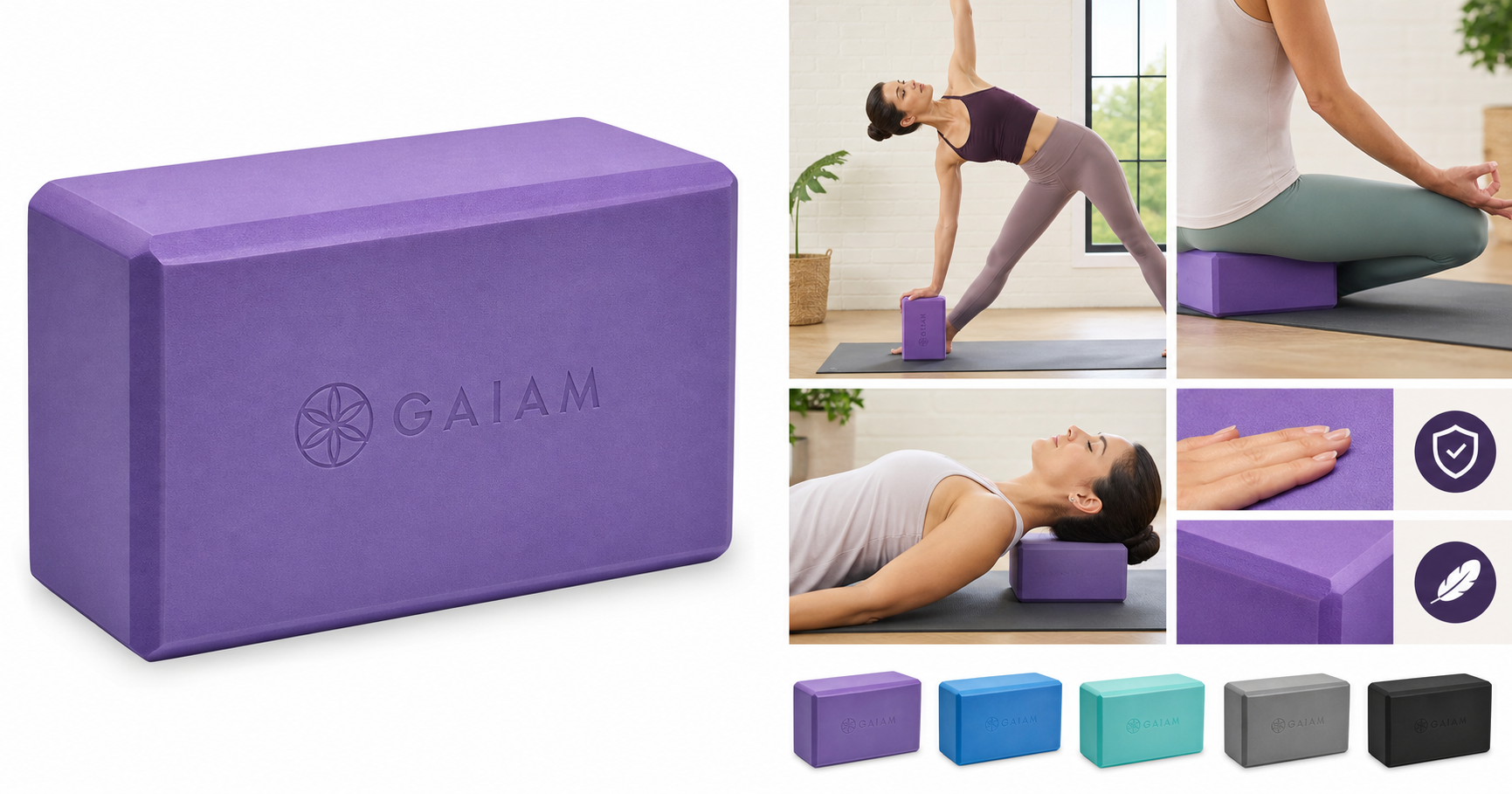
The Gaiam Yoga Block - Supportive Latex-Free EVA Foam - Soft Non-Slip Surface with Beveled Edges for Yoga, Pilates, Meditation is a standard-size foam yoga block aimed at everyday home and studio practice. It is constructed from lightweight, supportive EVA foam, with a non-slip surface and beveled edges to make gripping and repositioning easier.
Typical dimensions for this style of Gaiam block are approximately 9" x 6" x 4", which is the standard yoga block size widely used in studios. Gaiam offers this block in multiple colors, and it is sold individually rather than as a mandatory multi-pack, so users can buy exactly as many as they need (usually one or two).
On Amazon (product URL: https://www.amazon.com/dp/B075W63K67), the block is positioned as a versatile prop for:
- Yoga (Hatha, Vinyasa, Restorative, Yin)
- Pilates and general floor exercise
- Seated meditation support (under the hips or knees)
If you are building a basic yoga setup, this is one of the core props—alongside a mat and possibly a strap—that most practitioners will reach for regularly.
Why It Matters
A yoga block is far more than a convenience item. For many practitioners—especially beginners, people with tight hamstrings or shoulders, or those dealing with mobility limitations—it can be the difference between straining through a pose and practicing safely with proper alignment.
The Gaiam Yoga Block specifically aims to:
- Improve alignment: By bringing the floor closer, it allows you to keep a neutral spine and open chest rather than rounding or collapsing in standing and seated poses.
- Increase stability: Under the hand or foot, it provides a larger, more stable surface area than simply reaching for the floor when flexibility is limited.
- Extend reach: In standing poses like Triangle or Half Moon, a block under the bottom hand can make the pose accessible and reduce the risk of overstretching.
- Support restorative work: Placing the block under the back, hips, or head can create supported, relaxing shapes that are hard to achieve without props.
When used correctly, a block can help practitioners progress faster and more safely, building strength and flexibility without compensating with poor form. For many home yogis buying their first prop, an EVA foam block like this is a practical, budget-conscious starting point. With a current Amazon price around $16.66, it offers an accessible entry into using props without a large investment.
Key Advantages
1. Lightweight, Latex-Free EVA Foam
The block is made from EVA foam, which is known for being:
- Lightweight: Easy to carry in a bag to class or move around the mat, even during fast transitions.
- Slightly cushioned: Softer than cork or wood, which makes it more forgiving under weight-bearing joints such as knees, hips, or the back of the head.
- Latex-free: Important for users with latex sensitivities who need to avoid common allergens in fitness equipment.
For home practitioners or those commuting to a studio, this balance of support and lightness is often preferable to heavier cork or wood alternatives.
2. Non-Slip Surface and Beveled Edges
The Gaiam block features a textured, non-slip surface intended to provide traction for sweaty hands and to help the block stay put on the mat. The beveled (rounded) edges make it more comfortable to grip tightly, especially in poses where you bear significant weight on the block, such as:
- Supported Half Moon
- Modified Side Plank variations
- Lunge variations with hands on blocks
These edges also reduce the sharp, digging sensation you can get from perfectly square foam or wood blocks, improving comfort when the block is under the spine or hips.
3. Versatile Orientation and Standard Sizing
With its standard dimensions, the Gaiam block can be used in three orientations:
- Flat (lowest height) for gentle support and added width
- On the side (mid-height) for moderate lift
- On the end (tallest height) for maximum extension
This makes it suitable for a long list of applications:
- Under hands in forward folds or lunges
- Under the sacrum in supported bridge
- Under the head or shoulders in restorative postures
- As a seated lift during meditation or pranayama
Standard sizing also means it behaves similarly to blocks you’ll find in most yoga studios, so there’s no adjustment period if you’re used to studio props.
4. Comfortable for Meditation and Restorative Use
Compared to cork or wood, the EVA foam is noticeably softer, which is an advantage when using the block for:
- Seated meditation (under the sit bones)
- Kneeling poses (between the calves and thighs)
- Gentle heart openers (under the upper back or chest)
The mild give of the foam reduces pressure points, particularly helpful if you’re sensitive in the knees, hips, or lower back.
5. Accessible Cost for Building a Prop Collection
Because the block is generally priced affordably on Amazon—around $16.66 at the time of review—it lowers the barrier to owning one or two blocks at home. For many people, this is the first prop purchase after a mat, and the price point makes choosing Gaiam over a no-name alternative an easy upgrade in terms of brand reliability and consistency.
Key Limitations
1. Less Dense Than Premium Foam or Cork
While the block is supportive enough for most body weights in common poses, EVA foam is less dense than premium studio-grade foam or cork. In practice, that can mean:
- Slight compression under heavy load (for example, full body weight in arm balances that use the block).
- A somewhat “springy” feel compared with the rock-solid stability of cork.
For beginner and intermediate practitioners, this is rarely a deal-breaker, but advanced users who frequently practice strong, weight-bearing shapes on blocks may prefer denser foam or cork for maximum stability.
2. Prone to Scuffing and Cosmetic Wear
Soft foam tends to show scuffs, dents, and nail marks over time, especially if used on rough surfaces or transported loosely in a gym bag. Functionally, this doesn’t usually affect performance, but:
- The block may start to look worn sooner than a cork block.
- Darker colors may show dust and chalk lines; lighter colors are more prone to visible stains.
If you care about long-term aesthetics or plan to use the block in a professional studio setting, this is a consideration.
3. Not Ideal for Very Hot or Sweat-Heavy Environments
The non-slip texture helps, but EVA foam can still become slightly slippery in extremely sweaty conditions (e.g., hot yoga in a heated studio). For those environments, some practitioners prefer cork blocks, which generally improve in grip with moisture.
For typical room-temperature practice or moderate sweating, the Gaiam block should perform adequately, especially when used on a quality yoga mat.
4. Sold Individually (You May Want Two)
Many yoga sequences use two blocks at once—one under each hand for symmetrical support, or stacked for extra height. This product is typically sold as a single block, so if you’re equipping a home space from scratch, you’ll likely:
- Need to purchase a second identical block, effectively doubling the cost.
- Want to ensure you choose the same size and model for consistent feel.
This isn’t a flaw of the product itself, but worth factoring into your budget.
Who It’s For
The Gaiam Yoga Block is a strong fit for:
- Beginners and returning practitioners who need help reaching the floor safely and maintaining alignment.
- Home yogis building a starter kit who want a recognizable brand and standard dimensions without paying a premium price.
- Those with sensitive joints who prefer the softer feel of EVA foam over stiff cork or wood.
- Meditators and restorative practitioners who will use the block as a gentle support under the hips, back, or head.
- Students carrying props to class and needing a light, portable block that won’t add much weight to a bag.
If you mostly practice gentle flows, Hatha, Yin, or restorative yoga, and you’re not routinely using blocks for high-intensity, weight-bearing arm balances, this block is likely to meet your needs very well.
Who Should Skip It
You may want to look for a different style of block if:
- You prioritize maximum firmness and longevity. Cork or dense foam blocks remain visually cleaner and compress less over time.
- You regularly practice strong, advanced arm balances or inversions on blocks. In that case, the extra density of cork or heavy-duty foam can feel more secure.
- You practice mostly hot yoga in very sweaty conditions. Cork’s moisture-responsive grip may outperform EVA foam for very wet hands.
- You want a lifetime studio investment. Professional studios often choose heavier, denser props that withstand constant public use and cleaning.
In short, if you are a power or hot yoga practitioner who leans heavily on blocks as load-bearing equipment in every class, you may be better served by a cork or premium foam block even at a higher price point.
Final Recommendation
The Gaiam Yoga Block is a well-balanced, user-friendly prop that delivers what most home and casual studio practitioners need: reliable support, comfortable cushioning, and a trustworthy brand name at an accessible cost.
Its key strengths are its lightweight, latex-free EVA construction, non-slip surface, and beveled edges that make it comfortable and secure in the hand. The main trade-offs involve lower density and cosmetic durability compared to cork or heavy-duty studio blocks, along with potential grip limitations in extremely sweaty conditions.
For beginners, everyday home yogis, and anyone looking to improve alignment and comfort without overinvesting, this Gaiam block is an excellent first choice. If you anticipate heavy, long-term studio use or advanced, weight-bearing work on blocks, consider pairing or eventually upgrading to a denser cork or premium foam option, but as a starting point—especially around $16.66—this block represents strong value and dependable performance.