

Amazon Basics Extra Thick Exercise Yoga Mat with Carrying Strap: Budget Cushion for Everyday Workouts
What This Product Is
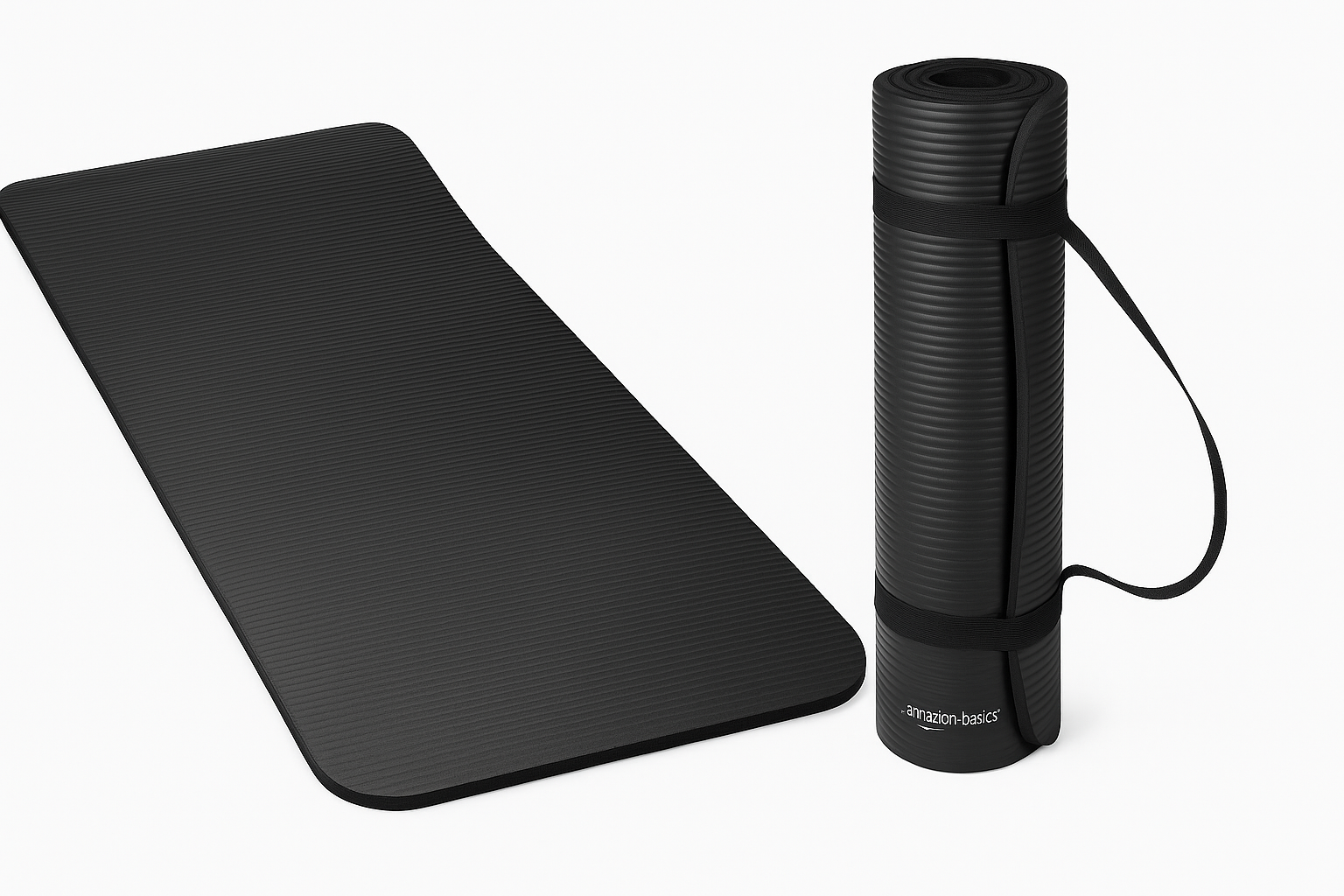
The Amazon Basics Extra Thick Exercise Yoga Mat with Carrying Strap is a full‑size foam exercise mat aimed at yoga, Pilates, and general floor workouts. It uses 100% NBR (nitrile butadiene rubber) foam and measures about 74 x 24 inches with a 1/2‑inch (13 mm) thickness, giving it noticeably more padding than a standard 4–6 mm yoga mat.
Key design points include:
- Extra‑thick 1/2‑inch cushioning for joint comfort
- Textured, non‑slip surface on both sides for added traction
- Elastic straps and a shoulder carry strap to keep the mat rolled up and easy to transport
- Wipe‑clean surface and hand‑wash‑only care
- Available in multiple colors (commonly black, blue, pink, and others depending on stock)
On Amazon, this mat typically sits in the entry‑level price range for thick foam exercise mats, and it’s often featured as a budget‑friendly option at around $27.33.
Why It Matters
For many people, the limiting factor in sticking with yoga or floor workouts isn’t motivation—it’s discomfort. Thin mats can feel harsh on knees, wrists, hips, and tailbone, especially on hard floors. The extra 1/2‑inch thickness of this Amazon Basics mat targets exactly that problem.
That additional cushioning can make a big difference for:
- Newer exercisers who are still building joint strength and mobility
- Users with sensitive knees or wrists
- Home workouts on tile, concrete, or hardwood floors
Because it ships with a carrying strap, it’s also a practical option for those who want one mat they can use at home and occasionally bring to the gym or studio.
Key Advantages
1. Generous Cushioning for Joints
The standout feature is the 1/2‑inch NBR foam. Compared with standard yoga mats, it feels significantly more pillowy, which helps when you’re:
- Doing kneeling poses (like low lunge, tabletop, or cat–cow)
- Holding planks, push‑ups, or core work
- Lying on your side or back for longer stretches or Pilates movements
If you’ve ever doubled up a thin mat or used a folded towel under your knees, this level of thickness largely removes the need for extra padding.
2. Lightweight and Portable
Despite its thickness, the mat stays relatively light (around 2.2 lb / 1 kg). The included elastic straps and shoulder sling make it simple to roll up, secure, and carry. You don’t have to buy a separate mat strap or bag, which reinforces its value‑oriented positioning.
3. Simple, Grippy Texture
The surface is textured foam, designed to improve grip under hands and feet and help the mat stay in place on most floors. For low‑ to moderate‑intensity flows and strength work, the texture is usually adequate, especially if you’re practicing in a cooler, drier room.
4. Easy to Clean and Maintain
The closed‑cell NBR foam doesn’t absorb sweat as quickly as more porous materials. You can typically wipe it down with a damp cloth and mild soap, then air‑dry. For users who want a low‑maintenance mat for at‑home workouts, this is a practical plus.
5. Strong Value for Thickness
One of the main reasons this mat is popular is that it delivers above‑average cushioning at an entry‑level price. For the cost of many basic thin mats, you’re getting a much more comfortable experience on hard floors, which is why it’s frequently recommended as a starter or backup mat.
Key Limitations
1. Less Stable for Balance Poses
The same softness that protects your joints can work against you in single‑leg and balance‑heavy postures. On a 1/2‑inch foam base, the foot tends to sink slightly, which can:
- Make poses like Tree, Warrior III, and Half Moon feel wobbly
- Reduce the precision of standing balances
If your primary focus is on alignment‑heavy, standing‑balance‑intensive yoga (for example, advanced vinyasa or Iyengar), you may find a thinner, denser mat more suitable.
2. Durability Is Serviceable, Not Premium
NBR foam is comfortable and flexible, but compared with high‑end natural rubber or dense PVC mats, it generally shows wear sooner. Over time, especially with daily use, you can expect:
- Compression marks where hands and feet repeatedly land
- Possible scuffing or slight flaking in high‑pressure zones
For occasional home workouts, this may be acceptable. For heavy, daily practice, durability is more of a concern.
3. Grip Can Vary With Sweat and Flooring
While the texture improves traction, this is still a budget foam mat, and grip may not compete with premium rubber or polyurethane‑topped mats. Common feedback patterns include:
- Good grip for dry hands and slower flows
- Some slipping when hands get sweaty or when doing fast, dynamic transitions
- Movement on very smooth floors if the mat or floor is dusty—checking and cleaning the surface before use helps
If you sweat heavily or do hot yoga, you may want a yoga towel on top or a more specialized mat.
4. Initial Odor
Like many synthetic foam products, the mat can have a noticeable plastic or chemical smell right out of the packaging. This usually fades after a few days of airing out, but it’s worth noting if you’re sensitive to odors.
Who It’s For
The Amazon Basics Extra Thick Exercise Yoga Mat is well‑suited for:
- Beginners to yoga or home workouts who want a comfortable, forgiving surface without a big upfront investment.
- Users with sensitive joints who prioritize cushioning for knees, wrists, hips, and spine.
- Casual or moderate‑intensity home exercisers doing yoga, Pilates, stretching, body‑weight strength training, and core work.
- Students who carry a mat occasionally and appreciate the included carrying strap and lightweight design.
- People on a budget who still want a full‑size mat from a recognizable brand, typically at around $27.33 when bought through Amazon.
If your main goal is to make floor work more comfortable and you’re not pushing the mat through high‑impact, high‑heat, or daily studio‑level use, this product lines up well with your needs.
Who Should Skip It
You may want to consider a different mat if:
-
Balance and precision are your priority
If you regularly practice advanced vinyasa, Ashtanga, or other alignment‑heavy styles, a thinner, denser mat (4–6 mm) will usually offer better stability. -
You need maximum grip in hot or very sweaty conditions
Hot yoga or extremely sweaty practices benefit from rubber or PU‑topped mats designed to get grippier as they get wet, often paired with a towel. -
You practice daily and expect long‑term durability
If you’re on the mat every day for years, it may be worth investing in a premium mat with stronger wear resistance, even though the upfront cost is higher. -
You’re highly sensitive to synthetic materials or odors
While the smell usually dissipates, those who strongly prefer natural or eco‑certified materials (like natural rubber or cork) may want to look at alternatives in those categories.
Final Recommendation
The Amazon Basics Extra Thick Exercise Yoga Mat with Carrying Strap is a comfort‑first, value‑oriented mat that excels at making floor‑based workouts more accessible and pleasant—especially for beginners, casual exercisers, and anyone with sensitive joints.
Its 1/2‑inch NBR foam delivers generous cushioning, the included carrying strap adds convenience, and the overall package is attractively priced at around $27.33 on Amazon. In return for that comfort and affordability, you accept some trade‑offs: slightly reduced stability in balance poses, moderate long‑term durability, and grip that is good but not specialized.
If you’re looking for a soft, forgiving surface for home yoga, stretching, and body‑weight exercise and don’t need studio‑grade performance, this mat is a strong, budget‑friendly choice. If you’re a serious yogi seeking maximum traction and long‑term durability, consider this a solid backup or starter mat and plan to upgrade to a premium, denser model as your practice evolves.