

Red Wigglers Composting Worms (1/8 lb): Small Starter Colony for Kitchen Scraps and Garden Soil Health
Product Context
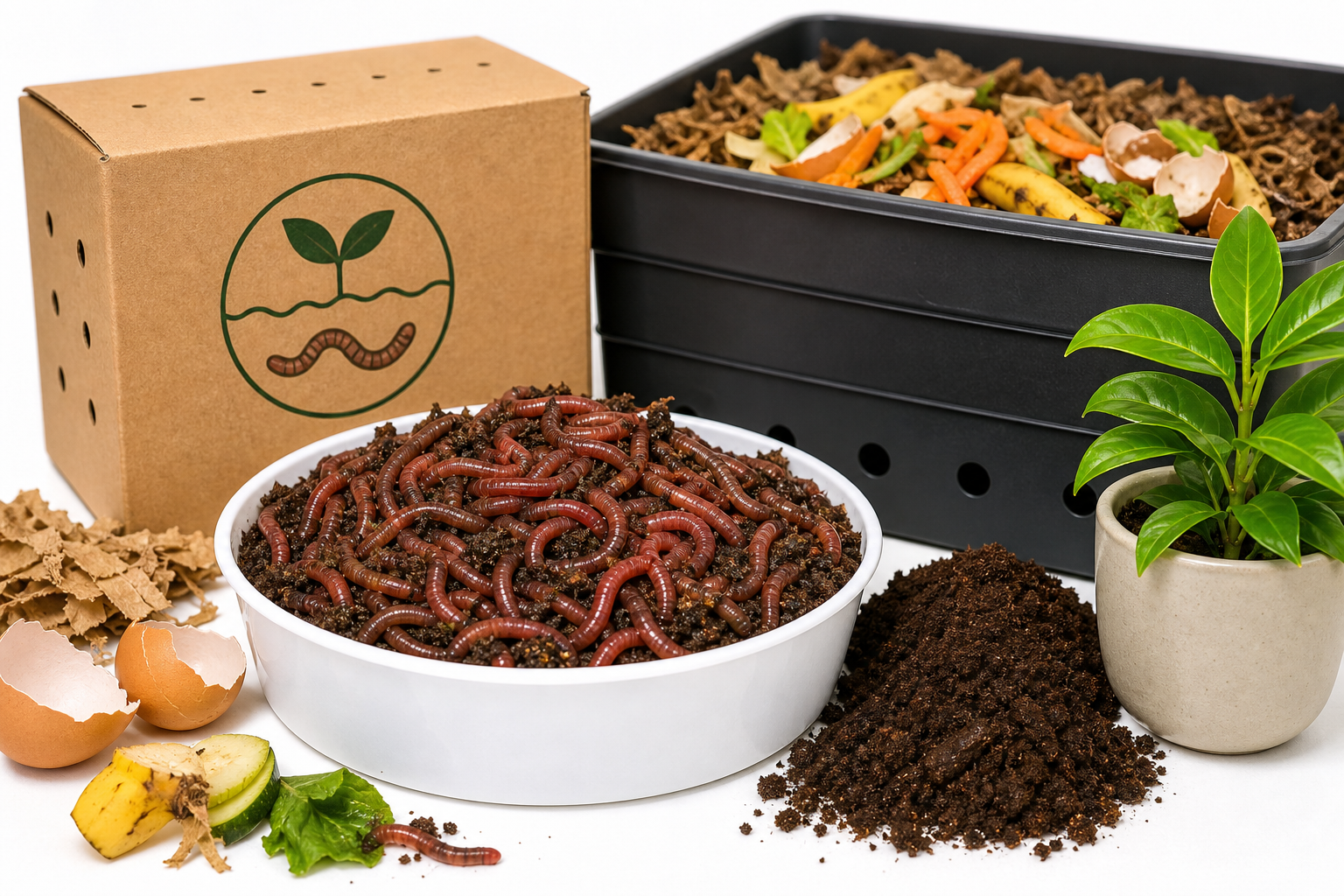
Red wigglers (commonly Eisenia fetida) are the standard species recommended for household vermicomposting because they thrive in shallow, high-organic-matter environments such as kitchen scrap bins and small outdoor systems. A 1/8 lb portion of Red Wigglers Composting Worms is designed as a compact starter colony for:
- Small worm bins or vermicompost towers
- Gardeners wanting to seed raised beds or compost piles with composting worms
- People new to worm composting who prefer to start with a modest population
Rather than providing a finished device or bin, this product focuses on living worms as the key biological engine of the composting process. Buyers are expected to already have, or to set up, a suitable worm bin or protected garden/compost environment.
Feature Breakdown
1. Worm Type and Intended Use
- Species: Marketed as red wigglers, the most widely recommended worms for kitchen-scrap composting and vermicompost bins.
- Applications:
- Indoor or outdoor worm bins with bedding (shredded cardboard, coconut coir, aged leaves, etc.)
- Seeding compost piles to speed up breakdown
- Adding to raised beds to enhance soil life and structure
2. Quantity: 1/8 lb Portion
- Scale: 1/8 lb is a relatively small quantity compared with the more common 1/2 lb or 1 lb worm orders.
- Use case:
- Ideal for compact bins, classroom projects, or testing vermicomposting on a small scale.
- Works as a biological “starter culture” that can grow over time if conditions are good.
- Expectations: With a small starting population, it will take longer for the colony to multiply and process larger volumes of kitchen scraps.
3. Nutrient-Rich Castings for Plants
- Red wigglers process food scraps, paper, and other organic matter into worm castings, a fine, dark, soil-like amendment valued for:
- Improved soil structure and water-holding capacity
- A rich mix of plant-available nutrients
- Beneficial microbial life that supports root health
- The product is positioned as a way to generate your own nutrient-rich vermicompost for:
- Houseplants
- Vegetable gardens and raised beds
- Landscape and ornamental plantings
4. Versatility in Garden and Farm Settings
- Suitable environments include:
- Vermicomposting bins and towers
- Partially shaded garden beds with ample organic matter
- Protected farm compost systems where temperature and moisture are moderated
- The worms are not intended to be general lawn earthworms; they perform best in organic-rich zones rather than mineral soil alone.
5. Easy-to-Manage Starter Size
- A small 1/8 lb portion is easier for beginners to manage because:
- It requires less food and bedding at first.
- The consequences of overfeeding or moisture imbalance are limited to a small bin.
- It’s also a convenient option for educators or hobbyists who want a simple, compact introduction to vermicomposting.
6. Pricing Context
- This product is typically offered in the entry-level range for live composting worms. While price can fluctuate, the listing is often positioned as a relatively accessible way to start vermicomposting without committing to a full pound of worms.
- When evaluating cost, consider both the immediate price ($28.99) and the long-term value of an expanding worm population and ongoing production of vermicompost.
Performance Insights
Composting Efficiency Over Time
With a 1/8 lb population, performance depends heavily on expectations:
- Initial throughput: The worms will only be able to process a modest amount of scraps per week. It’s important to start with light feedings—thin layers of food under bedding rather than large, dense deposits.
- Population growth: Under favorable conditions (moist but not waterlogged bedding, moderate temperatures, and balanced feeding), red wigglers reproduce steadily. Over several months, the colony can multiply and handle greater volumes of material.
- Castings output: In the early weeks, you’ll see relatively small amounts of vermicompost. Over time, as both the worm population and the amount of processed material increase, you can harvest castings more regularly.
Suitable Feedstocks
Red wigglers generally perform well with:
- Vegetable and fruit scraps (avoiding large amounts of citrus and onions)
- Coffee grounds and filters
- Crushed eggshells (for grit and buffering)
- Shredded cardboard, paper, and other carbon-rich bedding
Greasy, salty, or heavily processed foods should be avoided or added very sparingly. A small colony like this is less forgiving of overloading or improper feed types.
Environmental Tolerance
Red wigglers are known for handling a wide range of conditions, but they still have limits:
- Temperature: They prefer a cool to moderately warm environment, often around typical room temperatures.
- Moisture: Bedding should feel like a wrung-out sponge. Prolonged soggy conditions can reduce oxygen and harm the worms.
- Aeration: Adequate airflow and loose bedding help maintain aerobic decomposition and prevent odors.
For outdoor use—such as in gardens or compost piles—some protection from extreme heat, cold, and heavy rainfall will help the colony survive and expand.
Usability
Setup for Beginners
This 1/8 lb red wiggler product is well-suited to users who are:
- New to vermicomposting and want to learn with a small, manageable system.
- Experimenting with a DIY bin made from plastic totes, stacked trays, or wooden boxes.
- Using limited space, such as apartments or small patios.
To get started, buyers will need to provide:
- A ventilated bin with drainage (if used indoors, a catch tray or secondary container for any leachate is helpful).
- Bedding materials (e.g., shredded cardboard, coir, aged leaves) moistened to the right level.
- A small initial amount of food buried in the bedding.
Maintenance and Monitoring
- Feeding schedule: Add food only when previous scraps are visibly breaking down. A small colony will not keep up with large quantities of waste.
- Odor control: Properly maintained worm bins smell earthy, not foul. Overfeeding or poor aeration can cause odors.
- Pest management: Fruit flies and mites can be minimized by burying food, keeping a good bedding-to-food ratio, and avoiding excessive wet materials.
Learning Curve
The small starter size means that early mistakes are less costly in terms of wasted material or cleanup, but the colony is also more delicate. Close observation in the first few weeks can help ensure that temperature, moisture, and feeding are on track.
Trade-offs
Advantages
- Low-commitment entry point: 1/8 lb is an affordable and less intimidating way to begin worm composting.
- Good for small spaces: Ideal for compact bins, indoor setups, or single raised beds.
- Educational value: The modest population is perfect for classrooms, workshops, or hobby experiments.
Limitations
- Slower scale-up: Compared with purchasing 1/2 lb or 1 lb of worms, it will take longer before you can process substantial volumes of kitchen scraps.
- More sensitive to stress: Smaller populations can be more affected by sudden temperature swings, overfeeding, or moisture problems.
- Not a complete kit: The product is focused on the worms themselves; you must provide all infrastructure (bin, bedding, etc.) and basic vermicomposting knowledge.
Value Considerations
When comparing this 1/8 lb portion at $28.99 to larger quantities of red wigglers, consider:
- Your waste volume: If your household generates lots of vegetable scraps, you may outgrow a small colony quickly and prefer a larger initial purchase.
- Your goals: If your priority is learning, teaching, or testing a system, a small starter is often sufficient and cost-effective.
- Time horizon: Given time, a healthy colony can multiply, potentially offsetting the need for a larger initial purchase.
Conclusion
The Red Wigglers Composting Worms, 1/8 lb product offers a modest but flexible way to introduce living composting worms into a home, garden, or educational environment. Its strengths lie in the proven suitability of red wigglers for kitchen-scrap composting, the manageable starter size for beginners, and the long-term potential to produce high-quality worm castings for plants.
In return, buyers should be prepared for a slower ramp-up in composting capacity and the need to provide proper housing, bedding, and care. For users seeking to process large volumes of organic waste immediately, a larger worm order may be more appropriate. However, for those who want to start small, learn the basics of vermicomposting, and gradually grow a healthy worm population, this 1/8 lb red wiggler starter colony is a practical and approachable choice.