

Homyhoo 10-Gallon Potato Grow Bags (4-Pack) Review: Flexible Fabric Planters for Productive Patio Gardens
Overview
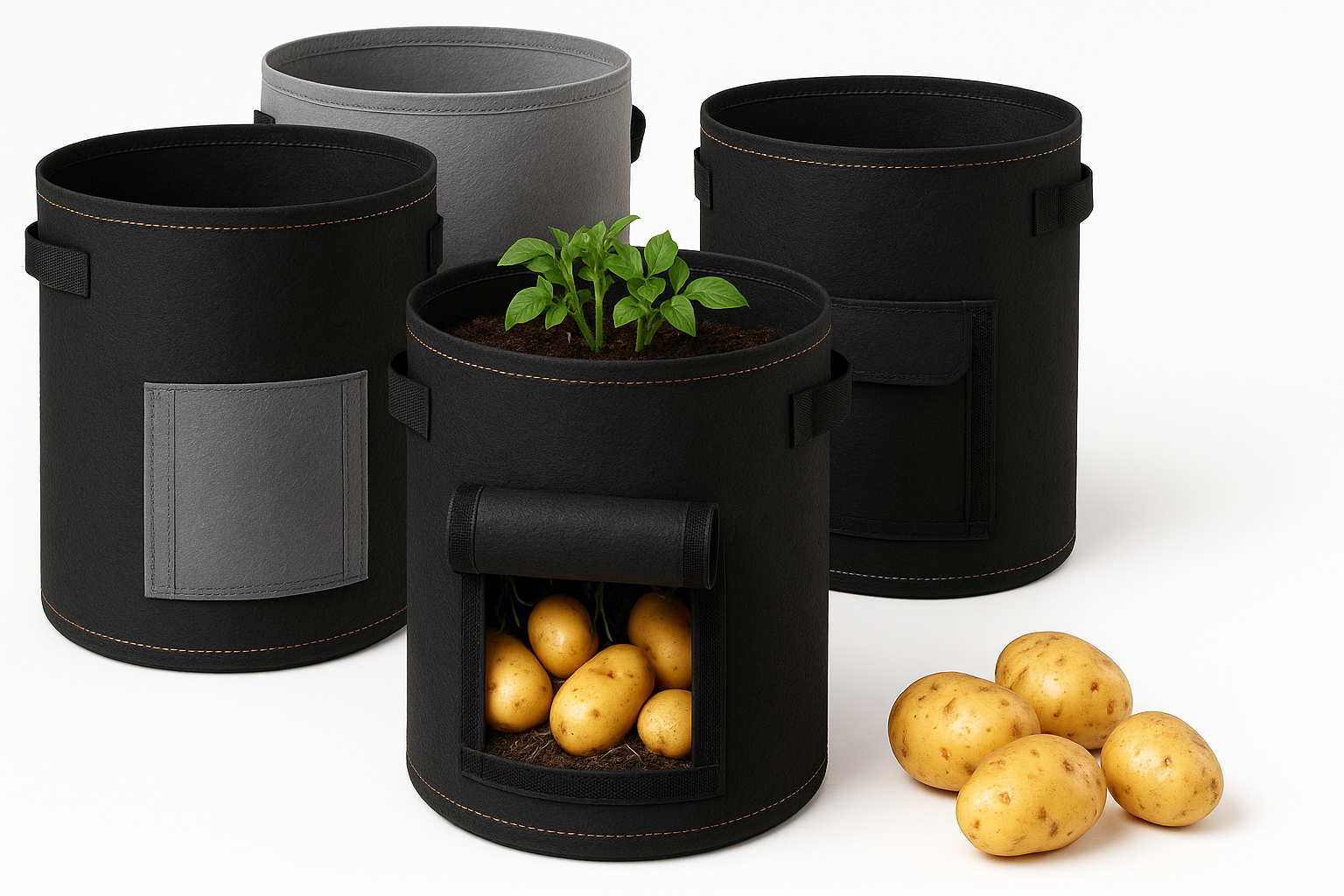
The Homyhoo Potato Grow Bags with Flap 10 Gallon, 4 Pack are fabric planter pots designed for gardeners who want to grow potatoes and other vegetables without dedicating in-ground bed space. Each 10-gallon bag includes sturdy carry handles and a Velcro-style harvest window, allowing you to check root development or harvest tubers without dumping the entire container.
Sold as a 4-pack, these bags are intended for repeated seasonal use and are suitable for patios, balconies, small yards, or rented spaces where digging up soil isn’t practical. For many buyers, they offer an accessible entry point into container gardening at around $17.99 for four bags.
Key Highlights
- Four 10-gallon grow bags in black and gray, suitable for potatoes, tomatoes, carrots, onions, radishes, and other vegetables.
- Breathable non-woven fabric that promotes aeration and drainage, helping prevent waterlogging and root rot.
- Front harvest window with flap to monitor root growth and harvest potatoes more selectively.
- Reinforced handles for moving bags around patios, decks, and garden paths.
- Foldable and reusable for multiple seasons when cleaned and stored properly.
- Designed for space-limited gardeners, including balcony and container gardeners who can’t or don’t want to dig in-ground beds.
Core Features
1. Capacity and Dimensions
- Each bag has a 10-gallon capacity, a common size for potato grow bags and large vegetable containers.
- This capacity is generally suitable for 4–6 seed potatoes per bag, depending on the variety and your desired harvest size.
- The volume and depth are also adequate for other root crops such as carrots, beets, and onions, or for single larger plants like bush tomatoes or peppers.
2. Material and Construction
- Bags are made from a thick, non-woven fabric that balances sturdiness with breathability.
- The fabric allows excess water to drain away while admitting air to the root zone, potentially encouraging healthier, more fibrous roots compared with solid plastic pots.
- Seams are stitched rather than heat-welded, giving the sides and bottom enough structure to stand once partially filled with soil.
3. Harvest Window with Flap
- A distinctive feature is the rectangular harvest window positioned on the side of each bag.
- The flap is usually secured with hook-and-loop (Velcro-like) closures, allowing you to:
- Check root and tuber development mid-season.
- Harvest a portion of potatoes without uprooting the entire plant.
- Loosen soil or remove damaged tubers with less disturbance.
- While many growers report that they don’t use the flap as often as expected, it remains a useful option, especially for those new to potato growing who want to monitor progress.
4. Handles and Portability
- Each bag includes two sewn-on handles made from a sturdy webbing material.
- Once filled, a 10-gallon bag can be heavy, but the handles make it easier to:
- Rotate bags to optimize sunlight.
- Move containers under shelter during storms or unexpected frost.
- Rearrange your layout as plants grow.
- Handle durability is usually adequate when bags are lifted from the bottom and not jerked or dragged while overfilled.
5. Foldable, Reusable Design
- At the end of the season, the bags can be emptied, brushed or washed, dried thoroughly, and folded flat.
- Properly dried fabric helps prevent mold and mildew, extending usable life.
- With normal use, many gardeners can expect multiple seasons out of a set, especially if not left in harsh sun and weather year-round.
Usage Experience
Setup and Planting
- Positioning: Place the empty bag where you intend to grow—ideally on a stable, level surface that can tolerate moisture drainage.
- Base Layer: Add a few inches of high-quality potting mix (not heavy garden soil), optionally enriched with compost and a balanced slow-release fertilizer.
- Planting Potatoes:
- Lay 4–6 seed potatoes (or pieces with healthy eyes) spaced evenly.
- Cover with several inches of soil, leaving room to add more as plants grow.
- Watering: Water thoroughly until moisture drains from the sides and bottom; maintain consistently moist, not soggy, conditions.
For other vegetables (tomatoes, peppers, carrots, etc.), treat the bag like a large, deep container: fill mostly to the top with suitable mix, plant accordingly, and ensure good drainage.
In-Season Care
- Hilling for Potatoes: As stems grow, add more potting mix or compost around them to encourage additional tuber formation higher up the stem, stopping a few inches below the rim.
- Monitoring via the Window:
- Open the flap periodically to check tuber size and soil moisture near the root zone.
- Close it securely after inspection to prevent light from greening the potatoes.
- Sun and Heat Management:
- Dark fabric can absorb heat; in very hot climates, consider placing bags where they receive morning sun and afternoon shade or stand them on light-colored trays.
- Watering Frequency: Fabric bags dry out faster than solid containers, especially in windy or hot conditions. Daily watering may be needed in midsummer, particularly for thirsty crops like potatoes and tomatoes.
Harvesting
- When foliage begins to yellow and die back, you can:
- Use the harvest window to pull out mature tubers while leaving smaller ones to size up.
- Or, tip the entire bag out onto a tarp and collect all potatoes at once.
- After harvest, remove remaining roots, shake out residual soil, then clean and dry the bag thoroughly.
Overall, users often find these bags convenient, forgiving, and space-efficient, especially for a first foray into growing potatoes or root vegetables in containers.
Strengths
-
Space-Efficient for Small Areas
Ideal for patios, balconies, renters, and anyone without traditional garden beds. You can place them wherever you have sufficient light. -
Good Aeration and Drainage
The non-woven fabric design encourages air pruning of roots and reduces the risk of waterlogged soil, improving root health relative to many rigid plastic pots. -
Flexible Planting Options
While marketed for potatoes, these bags are also effective for:- Carrots, beets, and radishes.
- Onions, garlic, and other alliums.
- Single larger plants like tomatoes, peppers, or eggplants.
-
Portability
Reinforced handles make it easier to reposition plants as sunlight patterns change or to move containers under shelter during adverse weather. -
Reusable and Easy to Store
The ability to fold the bags flat at season’s end is a major advantage for gardeners with limited storage space. -
Harvest Window Convenience
Even if used occasionally, the flap offers a unique way to check development or harvest gradually without fully disturbing the plant. -
Value for Quantity
As a 4-pack, this set typically offers a cost-effective way to outfit a small container potato patch or mixed vegetable container setup at about $17.99.
Weaknesses
-
Moisture Management Can Be Tricky
The same breathability that benefits roots also means the bags can dry out quickly in hot, sunny, or windy conditions. Inconsistent watering may lead to reduced yields or stressed plants. -
Harvest Window Limitations
Some gardeners find the flap less useful than expected, noting that:- It may be awkward to reach in deeply for tubers.
- If left open or not fully closed, light can reach potatoes, turning them green and inedible.
-
Potential Wear Over Time
While the fabric is relatively durable, repeated seasons of heavy use, dragging on rough surfaces, or lifting overfilled bags by the handles alone can weaken seams and straps. -
Requires Quality Potting Mix
To get good results, you need a well-draining, nutrient-rich mix. Using dense garden soil or poor-quality media can negate some of the benefits of the bag’s design. -
Limited Structural Rigidity When Empty
These bags rely on soil volume to stand upright. When partially filled, sides may slump until the volume is sufficient to support the fabric.
Suitable Scenarios
The Homyhoo 10-Gallon Potato Grow Bags are especially well-suited for:
-
Balcony and Patio Gardeners
Those with limited horizontal space but adequate sunlight who want to grow their own potatoes, carrots, or tomatoes in containers. -
Renters and Mobile Gardeners
People who need movable, non-permanent garden infrastructure that can be transported to a new home or rearranged easily. -
Beginner Gardeners
New growers wanting a low-barrier way to experiment with potatoes and other root vegetables without committing to in-ground beds. -
Supplemental Harvesters
Gardeners who already have beds but want to add a few bags for specialty varieties, trial crops, or to make use of small sunny corners. -
Season-Extending or Specialty Uses
Using bags to move plants into protected spaces during shoulder seasons, or dedicating them to particular crops (e.g., early potatoes or late-season plantings).
Less ideal scenarios include extremely hot, arid conditions without access to regular irrigation, or situations where a gardener prefers permanent raised beds and doesn’t want to manage container watering.
Final Evaluation
The Homyhoo Potato Grow Bags with Flap 10 Gallon, 4 Pack offer a practical, versatile solution for growing potatoes and other vegetables in compact or non-traditional spaces. Their breathable fabric construction, integrated handles, and harvest window make them more functional than basic plastic pots, particularly for root crops.
They are not a magic solution—good results still depend on quality potting mix, consistent watering, and adequate sunlight—but they provide a user-friendly platform for container gardening at a reasonable per-bag cost. The harvest window is a nice bonus, even if not every gardener uses it extensively.
If you’re looking for a flexible, reusable set of grow bags to expand or start a container vegetable garden, especially focused on potatoes and root vegetables, the Homyhoo 10-gallon 4-pack is a strong contender and a sensible choice in the $17.99 price range.