

The Calamity Club by Kathryn Stockett: A Deep-Dive Review of Her Long-Awaited Second Novel
Product Context
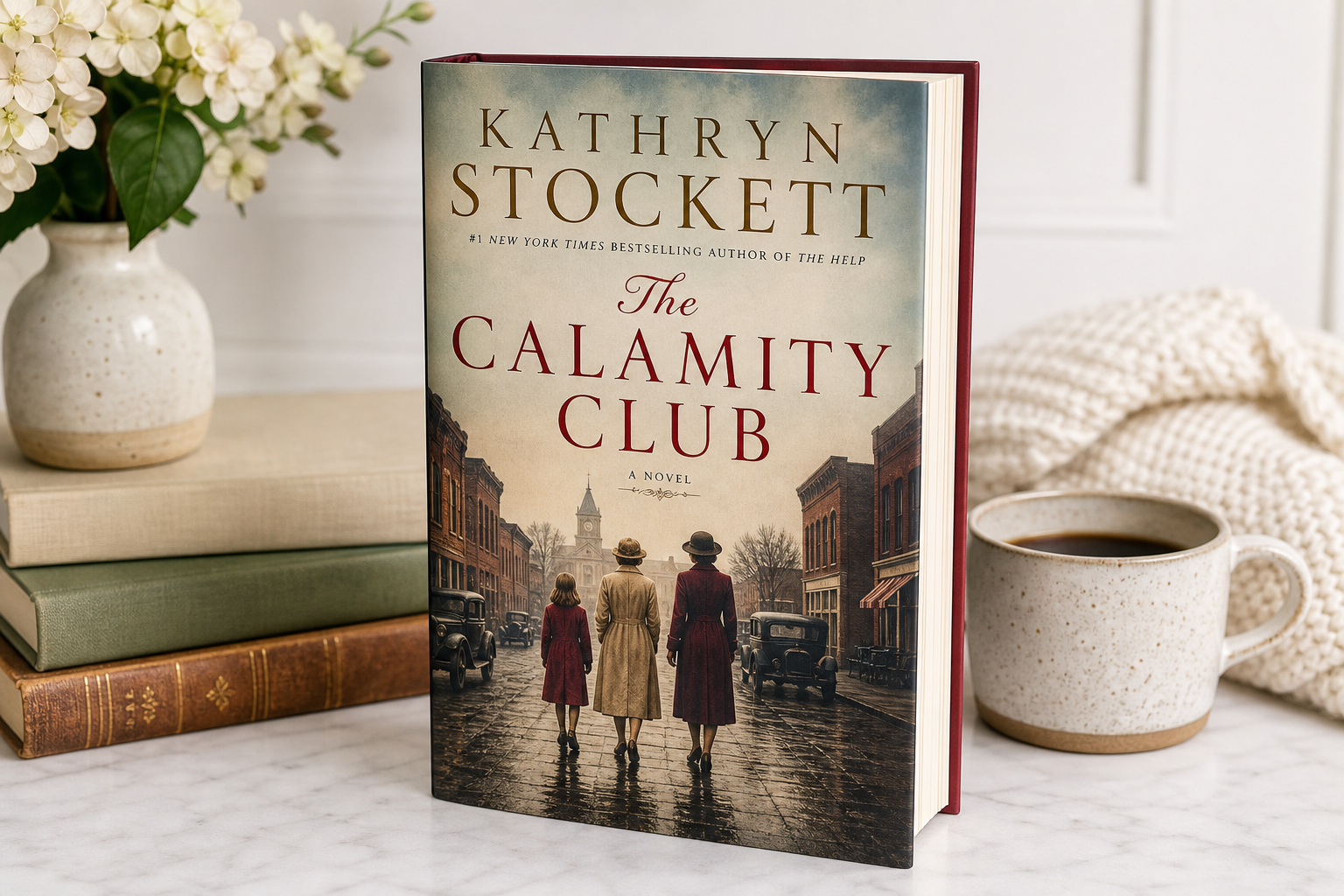
Kathryn Stockett’s The Calamity Club (ISBN 1954118813) is a substantial historical novel set in Oxford, Mississippi, in 1933, at the height of the Great Depression. Published by Spiegel & Grau as a first-edition hardcover, it runs well over 600 pages, positioning it as an immersive, slow-burn read rather than a quick, plot-light diversion.(catalog.bossierlibrary.org)
The story centers on three women whose lives intersect under mounting economic and social pressure:
- Meg Lefleur, an eleven-year-old girl abandoned by her mother one Christmas Eve and now one of the older, “unadoptable” residents at the Lafayette County Orphan Asylum.
- Birdie Calhoun, an unmarried woman who travels to Oxford to seek help from her well-connected sister, only to discover that her sister’s glamorous life is built on fragile illusions.
- Charlie, a woman in dire straits, running out of options and willing to risk much in pursuit of justice and survival.
As Birdie and Charlie’s paths cross with Meg’s, they become entangled in an audacious plan to reclaim what they believe is rightfully theirs—a plan that pushes against the constraints of gender, class, and respectability in the Jim Crow South. Even seemingly small acts of defiance carry significant danger, especially for women and children without power, money, or social protection.(catalog.bossierlibrary.org)
From a product standpoint, this edition is a hardcover aimed at readers who appreciate literary historical fiction and are comfortable committing to a long, emotionally intense narrative. If you’re considering purchasing it from the provided listing, expect a full-length, traditionally formatted hardback novel at around $24.01.
Feature Breakdown
1. Setting and Historical Backdrop
- Time and place: Oxford, Mississippi, during the early 1930s, with the Great Depression tightening its grip on families and institutions.
- Atmosphere: The novel uses economic hardship, social stratification, and regional tensions to heighten stakes. The orphanage, genteel homes, and small-town streets all function as pressure cookers for the characters’ decisions.
- Thematic use of history: The book doesn’t attempt to cover all facets of the Depression; instead, it narrows focus to impoverished women, orphans, and the social elite of a Southern college town. This creates a vivid microcosm of national upheaval—unemployment, desperate financial maneuvers, and sharp class divides are visible in nearly every plot thread.(catalog.bossierlibrary.org)
2. Character Focus
- Meg Lefleur: The emotional core of the novel. As an older child in the orphanage, she has enough insight to understand adult hypocrisy but is still vulnerable to abandonment and betrayal. Readers who appreciate coming-of-age narratives will likely connect strongly with her sections.
- Birdie Calhoun: Represents women squeezed between duty and self-preservation. Her journey from supplicant to skeptic—especially as she uncovers uncomfortable truths about her sister’s wealth and marriage—supplies much of the novel’s moral tension.
- Charlie: Perhaps the most unpredictable of the three. Her limited options and willingness to break rules create both momentum and ethical questions: how far is too far when survival is on the line?
Together, these perspectives explore friendship, loyalty, and the blurry line between justice and crime in a system stacked against them.
3. Plot and Structure
- Multi-thread narrative: The novel braids Meg’s orphanage experiences with Birdie’s immersion into her sister’s social world and Charlie’s increasingly risky gambits.
- Tone: A mix of tension, dark humor, and emotional poignancy. Expect sharp dialogue, morally gray plans, and scenes that are by turns heartbreaking and wry.
- Scale: With roughly 630–650 pages, the story has room to develop subplots and secondary characters, including other orphans, staff at the asylum, and figures from Oxford’s upper crust.(catalog.camdencountylibrary.org)
4. Physical Format and Presentation
- Binding: Hardcover edition designed for durability and long-term shelf life.
- Length: Around 638–656 pages, depending on listing; dense enough that it feels like a major reading commitment.(catalog.camdencountylibrary.org)
- Intended use: Suitable for home libraries, book clubs, and readers who prefer substantial, tactile volumes over digital formats.
Performance Insights
While “performance” for a book means something different than for hardware, several aspects still determine how well The Calamity Club delivers on its promise.
Narrative Pacing
- Early chapters: Largely focused on world-building and character setup. Readers may find the opening deliberately paced, with attention to the orphanage routines, social calls, and the social codes governing Oxford society.
- Middle stretch: As Birdie uncovers deceptions and Charlie’s prospects worsen, the plot accelerates. The converging strands generate a near-heist-like tension without abandoning emotional depth.
- Final act: The climax leans more on emotional payoff and consequences than on pure suspense. Outcomes hinge on characters’ relationships, loyalties, and personal growth rather than on a single twist.
For readers who prioritize character complexity and atmosphere, this pacing is a strong fit. Those who want continuous, thriller-style momentum might find some segments slower than expected.
Emotional Impact
- Themes of abandonment and found family: Meg’s status as one of the “big girls” at the orphanage keeps the fear of aging out of care front and center. Her relationships with other orphans and adults highlight both cruelty and unexpected kindness.
- Class and hypocrisy: Birdie’s discovery that her sister’s privilege stands on hidden compromises adds a layer of social critique without turning the novel into a polemic.
- Risk and defiance: Charlie’s storyline foregrounds what it means for women to claim agency in an era when legal and economic systems offered them few protections.
Readers comfortable with emotional intensity, including scenes of hardship and injustice, are likely to find the experience rewarding and resonant.
Reception and Readership
Early commentary from readers and reviewers has highlighted the novel’s immersive storytelling, rich characterization, and strong sense of place, often drawing comparisons—implicitly or explicitly—to Stockett’s earlier work, The Help.(bookreporter.com) While the subject matter and time period differ, expectations for nuanced portrayals of women under social constraint are largely met.
Usability
For a book, “usability” encompasses readability, accessibility, and how well the format supports different reading contexts.
Readability
- Prose style: Accessible but detailed, combining dialogue-driven scenes with descriptive passages. Readers accustomed to contemporary historical fiction should find the language approachable.
- Structural clarity: The alternating focus among Meg, Birdie, and Charlie is generally easy to follow, with each thread clearly signposted.
- Content considerations: The novel includes depictions of abandonment, economic desperation, and systemic injustice. While not gratuitously graphic, these elements may be challenging for some readers.
Physical Comfort
- Weight and size: As a thick hardcover, it can feel heavy in one hand, especially for long reading sessions. It’s better suited to reading at a desk, table, or with support rather than on a crowded commute.
- Durability: The hardcover format is well-suited for re-reading, lending, or long-term placement in a personal library or classroom collection.
Ideal Use Cases
- Book clubs: Thematically rich and character-driven, with abundant material for discussion—morality, economic fairness, gender roles, and the ethics of resistance.
- Academic or classroom contexts: Potentially useful as a contemporary example of Depression-era historical fiction with a focus on women and children in the American South.
- Leisure reading: Best for readers who enjoy multi-night or multi-week engagement with a single, immersive novel.
Trade-offs
Every major feature of The Calamity Club comes with corresponding compromises. Understanding these can help you decide if this edition is right for you.
Length vs. Momentum
- Strength: The extended length allows for deep character development, nuanced relationships, and a fully realized sense of place. Secondary characters and side stories feel fleshed out rather than perfunctory.
- Trade-off: Some readers may find the pacing uneven, especially in sections that linger on social gatherings, institutional routines, or backstory. If you prefer tightly compressed narratives, the page count may feel excessive.
Emotional Depth vs. Comfort
- Strength: The novel does not shy away from depicting the emotional and material precariousness of orphans and working-class women during the Depression. This honesty underpins much of its power.
- Trade-off: The same qualities can make the book emotionally demanding. Scenes involving abandonment, exploitation, and limited choices for women may be heavy for readers looking for lighter escapism.
Historical Specificity vs. Broad Scope
- Strength: By concentrating on Oxford, Mississippi, and a trio of interlinked protagonists, the book offers a focused, intimate view of the era.
- Trade-off: Readers seeking a broader exploration of the Depression across multiple regions or perspectives (e.g., labor movements, urban settings, or racially diverse viewpoints) may find the focus narrower than they’d like.
Hardcover Format vs. Portability
- Strength: The hardcover edition feels substantial and well-suited for collectors, library use, and gifting.
- Trade-off: It is less portable than a paperback or e‑book and more susceptible to wear if frequently carried in bags.
Price vs. Longevity
- Strength: As a first-edition hardcover, the book is designed to last, and many readers consider it a long-term library staple, especially if they plan to re-read or share it.
- Trade-off: Relative to shorter or softcover titles, the cost at $24.01 may feel high if you tend to read a novel only once before moving on. Weigh this against its length and re-read potential.
Conclusion
The Calamity Club is a substantial, emotionally resonant historical novel that leans into its length to deliver layered characters, a vivid sense of Depression-era Mississippi, and an examination of how marginalized women improvise power in a rigid social order. Its strengths lie in detailed world-building, complex relationships, and the interplay of individual choices with systemic constraints.
It is an especially strong fit if you:
- Enjoy character-driven historical fiction with a Southern setting.
- Appreciate multi-perspective narratives that foreground women’s experiences.
- Are comfortable committing to a long, emotionally intense story.
It may be less ideal if you:
- Prefer concise, fast-paced plots with minimal digressions.
- Want light, escapist reading without much exposure to hardship or injustice.
- Primarily read on the go and dislike handling large hardcovers.
For readers who align with the first group, this hardcover edition offered at approximately $24.01 is likely to feel like a worthwhile investment in both shelf space and reading time. If you are considering purchasing via the provided Amazon listing, you can reasonably expect a durable, full-length edition of one of 2026’s most talked-about works of historical fiction from a widely recognized author.