

Ernie Ball Regular Slinky 10–46 Review: The Industry-Standard Electric Guitar Strings
Overview
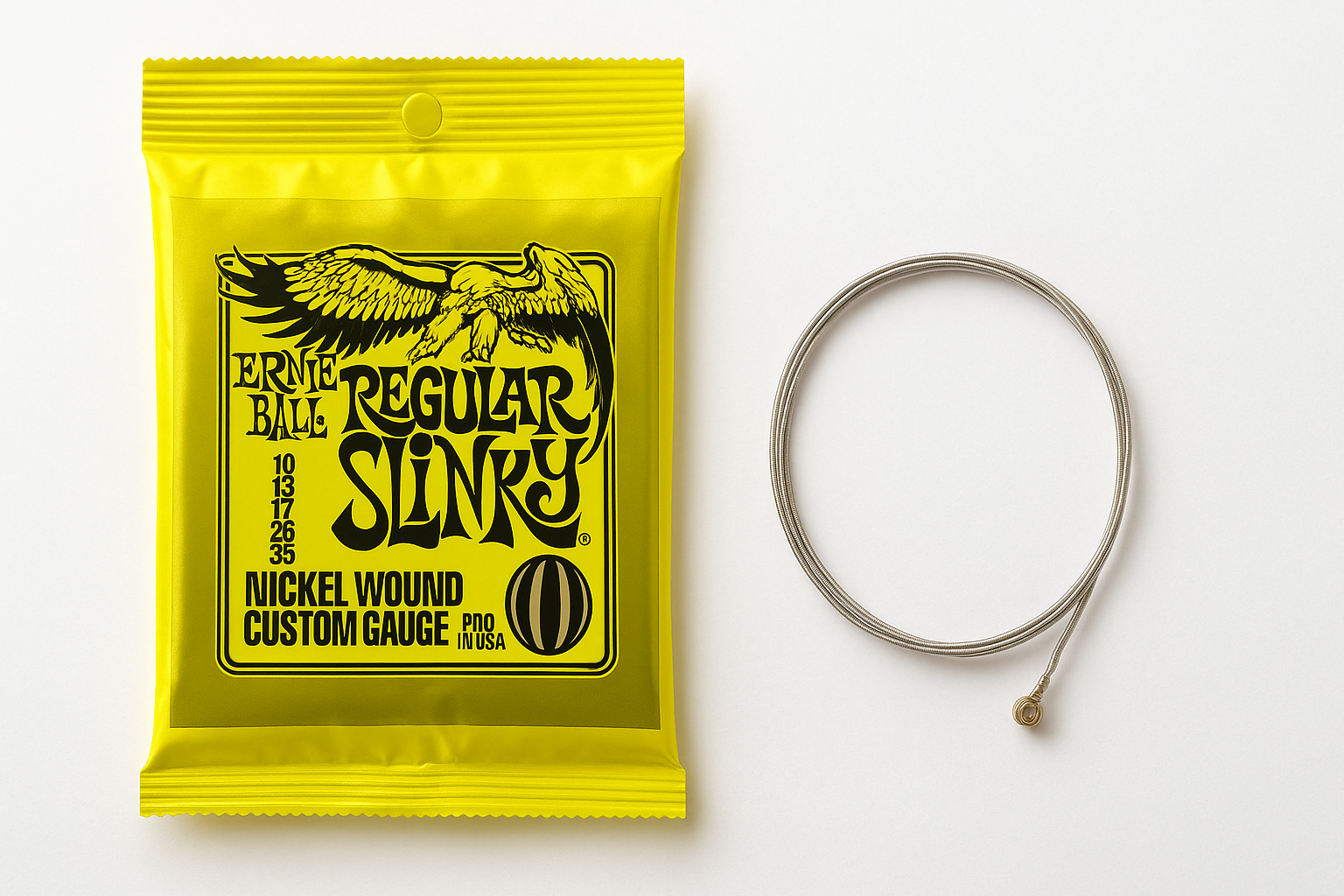
Ernie Ball Regular Slinky Nickel Wound Electric Guitar Strings, 10–46 Gauge (P02221), are often described as the industry standard electric guitar string set. Built around a medium gauge (10–46) with nickel-plated steel windings over a tin-plated hexagonal steel core, they aim to deliver a bright yet balanced tone that works for rock, blues, pop, and worship guitar alike.
Regular Slinky is positioned as a workhorse set: predictable feel, consistent quality control, and wide availability. For many players, it’s the default choice when they are unsure what strings to buy, and it’s a common reference point when comparing other brands and gauges. In the context of competing nickel-wound sets, these strings prioritise familiarity and reliability over experimental materials or coatings.
If you are looking for a versatile set that feels “normal” on most 25.5" and 24.75" scale electric guitars, Regular Slinky 10–46 is an obvious candidate. It is frequently sold both as single packs and as multi-packs, and typically sits in an accessible price range around $8.99, which makes it easy to keep a few spare sets on hand.
Standout Features
Classic 10–46 gauge with a balanced tension profile
The 10–46 gauge has become a de facto standard for electric guitars because it offers a middle ground between playability and resistance:
- String gauges: .010, .013, .017, .026, .036, .046
- Feel: Light enough for expressive bends on the treble strings, but firm enough on the wound strings to keep rhythm parts tight and in tune.
This balance makes Regular Slinky 10–46 a comfortable starting point for beginners and a dependable default for experienced players.
Nickel-plated steel windings on a hex core
The wound strings use nickel-plated steel wrapped around a tin-plated, hexagonal steel core. This choice of materials and construction results in:
- Bright, present attack with clear note separation.
- Rounded high end that avoids the overly glassy treble some stainless-steel sets can produce.
- Stable intonation and tuning, thanks to the hex core’s grip on the winding wire.
The plain strings are specially tempered, tin-plated high-carbon steel, designed to provide both strength and a consistent feel across the neck.
Widely trusted by working guitarists
Regular Slinky strings are used by many well-known players and countless gigging musicians. Their popularity stems less from a radical tone and more from predictable performance:
- Replacement sets are easy to find at music stores and online.
- Multiple guitars can be strung with the same gauge set, simplifying setups and maintenance.
- The strings behave consistently from pack to pack, which is important for touring and studio work.
Element Shield Packaging
Ernie Ball’s Element Shield packaging helps to protect against humidity and corrosion before the pack is opened. In practice, this means:
- Strings pulled from a new pack tend to feel fresh and bright.
- It’s practical to buy multiple sets at once without worrying that unopened packs will tarnish quickly.
Supporting Features
Beyond the headline specs, several smaller details contribute to the Regular Slinky experience:
- Round-wound construction: Provides a familiar feel and harmonic content, suitable for everything from crunchy rhythm to clean chord work.
- Ball-end design: Standard colour-coded ball ends make installation straightforward on most bridges and tailpieces.
- Uncoated feel: No polymer coating between your fingers and the metal, which many players prefer for a more direct, tactile connection.
- Made in the USA: Manufactured in California to tight tolerances, which supports the overall consistency and quality control.
These supporting features don’t radically differentiate Regular Slinky from all competitors, but they align with what many players expect from a dependable, mainstream set of electric guitar strings.
Usability
Feel and playability
On most standard-scale electrics, Regular Slinky 10–46 feels:
- Moderately stiff on the bass side, providing a solid platform for palm-muted riffs and tight rhythm parts.
- Manageable on the treble side for bends, vibrato, and legato playing.
Players moving up from 9–42 or 9–46 sets may initially find the tension a bit firmer, especially for whole-step bends high on the neck. However, this extra resistance often translates into more control over pitch and dynamics once you adjust.
String changes and setup
Installation is straightforward:
- Thread the ball end through the bridge or tailpiece.
- Cut to length and wind onto the tuning post as usual.
- Stretch the strings gently and retune a few times until stable.
Because the gauge is so common, many guitars ship from the factory with a similar set. If your instrument was set up for 10–46, swapping to Regular Slinky typically requires minimal adjustment, if any.
Tuning flexibility
- Standard tuning (E–standard): An excellent match; tension feels neither floppy nor overly stiff.
- Half-step down (E♭): Still workable; the strings feel a bit looser but retain control, making them a popular choice for players who occasionally tune down a semitone.
- Drop tunings (e.g., Drop D): The low string can feel slightly loose for very aggressive picking; some players who live in lower tunings prefer a heavier set for tighter response.
For players who alternate between standard tuning and E♭, Regular Slinky 10–46 often strikes a good compromise.
Performance
Tonal character
Regular Slinky strings are voiced for a bright yet balanced sound:
- Highs: Clear and present, with enough sparkle to cut through a mix but not so sharp as to become harsh with most pickups and amps.
- Mids: Full and articulate, supporting crunchy rhythm tones and singing leads.
- Lows: Tight and controlled, especially helpful for rock and modern worship rhythm parts where definition matters.
On single-coil guitars, they help maintain clarity and chime without becoming shrill. On humbucker-equipped instruments, they add definition that prevents heavily driven tones from turning muddy.
Genre suitability
Regular Slinky 10–46 is versatile enough to handle most popular styles:
- Rock & classic rock: A natural fit; many iconic rock recordings have been made with similar nickel-wound 10–46 sets.
- Blues & blues-rock: The balance between tension and flexibility is well suited to expressive bending and vibrato.
- Pop & indie: The bright but controlled attack works well for clean and edge-of-breakup tones.
- Metal & hard rock: Effective for standard or E♭ tuning, though some down-tuned metal players may prefer heavier gauges for extended low notes.
Longevity and stability
Although these strings are uncoated, they are designed for solid durability for their category:
- Tuning stability: Once stretched in, they tend to hold tuning reliably, even with moderate tremolo use and frequent bending.
- Lifespan: With normal care (wiping down after playing, washing hands first), many players get a reasonable number of hours of bright, usable tone before noticeable dullness sets in.
Heavy-handed players or those with more acidic sweat may find they need to change them more often, but the accessible price point around $8.99 makes regular changes feasible for most.
Pros and Cons
Pros
- Widely accepted industry-standard gauge (10–46) that suits a broad range of players and guitars.
- Bright, balanced tone that works across genres, from clean to high gain.
- Comfortable, familiar feel with enough tension for control but not so much that bending becomes difficult.
- Consistent quality control, with packs behaving predictably from set to set.
- Element Shield packaging helps keep new packs fresh until opening.
- Easy to source globally, both online and in brick-and-mortar music stores.
- Accessible pricing (often around $8.99 per single pack) encourages timely string changes.
Cons
- Uncoated design means they may not last as long as premium coated strings for players who prioritise maximum lifespan.
- Medium tension may feel stiff for beginners or those used to 9-gauge sets.
- Not optimised for very low tunings, where heavier gauges provide better string tension and clarity.
- Tone is intentionally conventional, so players seeking radically different or boutique string character might look elsewhere.
Summary
Ernie Ball Regular Slinky Nickel Wound Electric Guitar Strings, 10–46 Gauge (P02221), are a safe, dependable choice for electric guitarists who want a familiar feel and a bright, balanced tone. Their medium gauge, nickel-plated steel construction, and consistent manufacturing make them a strong all-rounder for rock, blues, pop, and many modern styles.
They are particularly well suited to:
- Players setting up a guitar for general-purpose use in standard or half-step-down tuning.
- Guitarists who value predictability and easy availability when replacing strings.
- Musicians who prefer the direct feel of uncoated strings, with classic nickel-wound tonality.
If you want a versatile, no-nonsense set of electric guitar strings that has effectively become a benchmark for 10–46 nickel-wound sets—and you appreciate being able to buy multiple packs at an approachable price like $8.99—Ernie Ball Regular Slinky is an option you can confidently consider as your everyday string choice.