

DJI Mic Mini (2 TX + 1 Mobile RX) Review: Compact Dual Wireless Audio for Phones and Creators
Overview
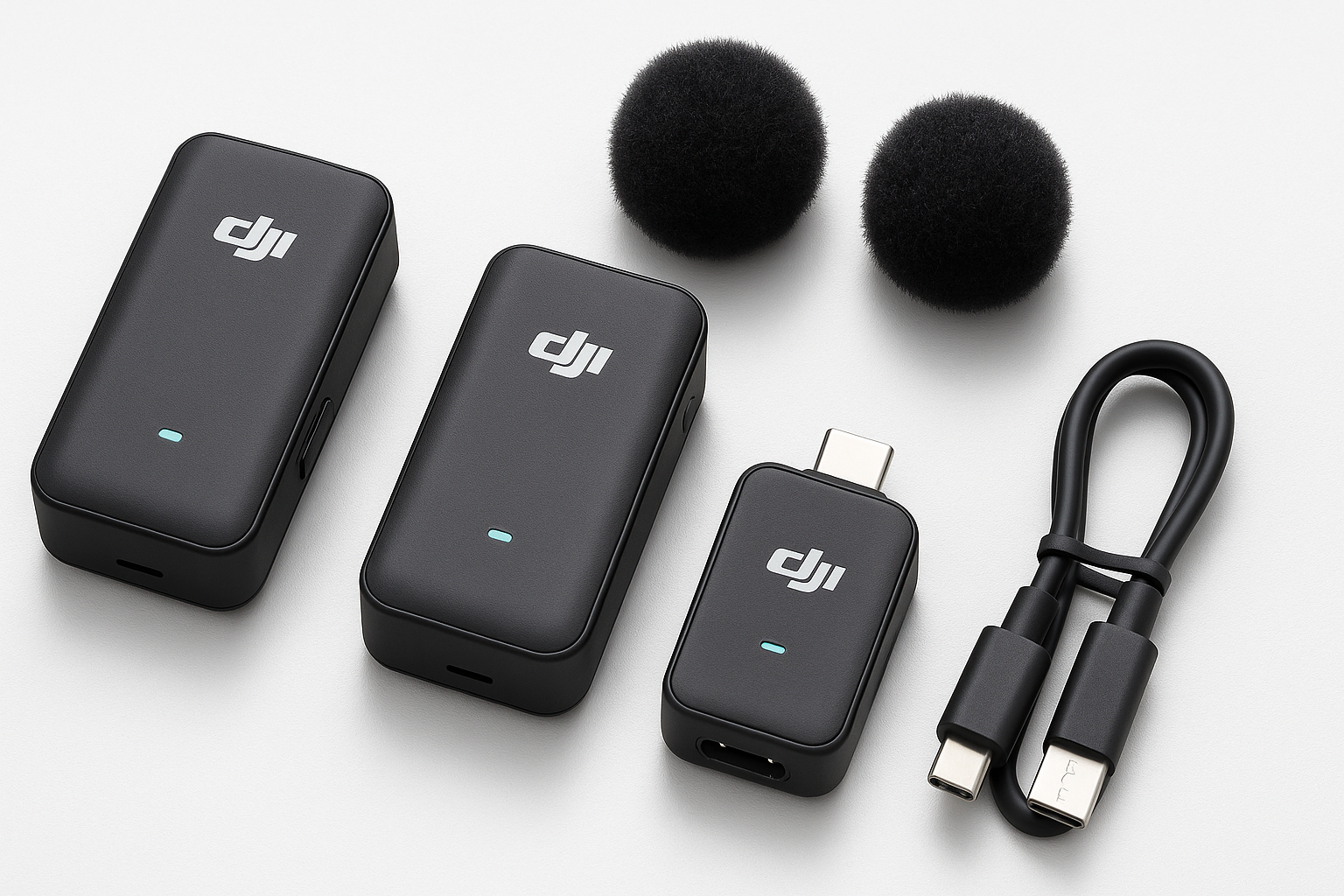
The DJI Mic Mini (2 TX + 1 Mobile RX) is a streamlined member of DJI’s wireless microphone lineup, designed first and foremost for smartphone-centric creators. The kit pairs two ultra-compact transmitters (TX) with a single mobile receiver (RX) that plugs directly into compatible phones and tablets, targeting vloggers, YouTubers, streamers, and mobile journalists who need better audio than their phone’s built-in mic can deliver.
While it borrows technology from the larger DJI Mic ecosystem, the Mic Mini focuses on portability and simplicity. You get dual-channel recording, up to a rated 300 m of wireless range in ideal conditions, active noise cancelling, and plug-and-play operation for supported iOS and Android devices, plus compatibility with PCs and tablets via USB-C.
For buyers who want a compact, phone-ready system from a reputable brand at around $59.00, the DJI Mic Mini stands out as a practical everyday audio upgrade.
Standout Features
1. Dual Transmitters for Two-Person Setups
The inclusion of two transmitters in the box is the defining feature of this combo. This allows:
- Two-person interviews directly into your phone.
- Host + guest formats for podcasts, field reporting, or on-street interviews.
- Redundant recording for a single subject (e.g., one mic on the talent, one near an instrument or ambient source).
Each transmitter is a self-contained clip-on mic, designed to be worn on clothing or mounted with accessories. For mobile creators who often work with guests, this alone can justify the kit over single-mic solutions.
2. Mobile-Focused Receiver (RX)
Unlike traditional camera-first wireless kits, this configuration centers on a mobile receiver designed to connect directly to smartphones and tablets. Key advantages:
- Plug-and-play connectivity for compatible iPhones and Android phones via the appropriate connector or adapter.
- Clean, cable-free mounting—no extra audio interface or clumsy cabling from camera to phone.
- Power and monitoring handled by the phone, simplifying the setup for travel and run‑and‑gun content.
For creators whose primary camera is their phone, this feels naturally integrated into a mobile workflow.
3. Long-Range 2.4 GHz Wireless (Up to 300 m Rated)
DJI rates the Mic Mini for up to 300 m of transmission range in ideal, line-of-sight conditions. In practical terms, that means:
- Stable performance in typical scenarios like walk‑and‑talk vlogs, wedding speeches, and small to mid‑sized events.
- Enough headroom to place the camera or phone at a distance without immediately worrying about dropouts.
As with any 2.4 GHz system, real-world range will be lower in crowded RF environments or with obstacles, but the headroom is welcome.
4. Active Noise Cancelling (ANC) for Cleaner Voice Pickup
Each transmitter supports active noise cancelling, which can help tame consistent background noise such as:
- AC hums or fan noise
- Light traffic noise in urban settings
- Low-level crowd ambience in busy locations
ANC is not a substitute for proper mic placement or a quiet environment, but it can make voice recordings more intelligible when you can’t fully control your surroundings.
5. Ultralight and Discreet Form Factor
Both the transmitters and the mobile receiver are very compact and lightweight, which matters for:
- Comfort when clipped to clothing for long shooting days.
- Discreet on-camera appearance.
- Simple packing in a small pouch or tech organizer.
If you’re used to bulkier wireless systems, the Mic Mini will feel notably less intrusive.
Supporting Features
Beyond its headline specs, the DJI Mic Mini includes a set of supporting features that round it out as a day-to-day tool:
- Digital wireless link in the 2.4 GHz band for low-latency transmission suitable for live monitoring and streaming.
- Dual-channel recording into a single device, allowing:
- Mono mix of both transmitters for quick social uploads.
- Separate left/right channel recording in supported apps for post-production balancing.
- Onboard controls on TX/RX units for pairing, muting, and toggling functions like ANC.
- Indicator LEDs on both the transmitters and receiver so you can visually verify link status, battery, and mode at a glance.
- Compatibility with PC/Tablet via USB-C in many cases, allowing you to repurpose the system for video calls, webinars, or desktop recording with the same kit.
Depending on the retailer or bundle configuration, you may also see accessories like windscreens and clips that improve handling in outdoor or on-the-go scenarios.
Usability
Setup and Pairing
Out of the box, the transmitters and receiver are generally pre-linked, so most users can:
- Plug the mobile receiver into the phone or tablet.
- Power on the transmitters.
- Confirm solid link LEDs.
- Start recording in a compatible camera or recording app.
For firmware updates or more advanced control, the system integrates with the DJI Mimo app on compatible devices, letting you tweak parameters and update firmware when necessary.
Mobile App and Controls
The Mimo app provides access to device settings, including ANC, auto power-off, and other system options. Importantly:
- Bluetooth connectivity is primarily used for settings and updates, not for audio streaming.
- For actual audio recording, the receiver should be physically connected to the phone via USB-C or Lightning (depending on your adapter/cable).
This design keeps latency low and reliability high, but it can be confusing if you expect Bluetooth audio functionality.
Everyday Handling
In everyday use, the DJI Mic Mini is designed for a minimal friction workflow:
- Clip transmitters on talent.
- Plug the receiver into your phone.
- Confirm audio in your chosen app.
- Hit record.
The low weight and compact size mean the system doesn’t dramatically change the ergonomics of shooting handheld with a smartphone, and it fits easily alongside a small phone gimbal or grip.
Performance
Audio Quality
For a compact 2.4 GHz wireless system, the DJI Mic Mini delivers clean, broadcast-friendly voice capture that is well-suited to spoken word content:
- Speech comes through with good clarity and presence.
- Frequency response is tuned for intelligibility rather than theatrical richness, which is exactly what most social and vlog content requires.
- With ANC engaged, persistent low-level noise is reduced, though you may notice a slight change in tonal character in more aggressive filtering scenarios.
For best results, proper mic placement—typically mid‑chest height, around 20–25 cm from the mouth—remains important.
Wireless Stability and Range
Within typical shooting distances (a few to a few dozen meters), the system maintains a stable connection with minimal artefacts when there is clear line of sight.
In more challenging environments—crowded venues, lots of wireless devices, walls or metal structures—any 2.4 GHz system can experience range reduction or occasional glitches. The Mic Mini’s rated 300 m range provides enough overhead that typical vlog and interview work rarely pushes it to its limits.
Latency and Monitoring
Latency over the digital link is low enough for natural lip-sync in video and live streaming scenarios. When monitoring through the phone or tablet, total system latency will depend on the device and app, but remains acceptable for most non-musical use cases such as talk shows, commentary, and tutorials.
Battery Life
DJI targets multi-hour operating times per charge on both transmitters and the receiver, sufficient for most shoots or several recording sessions throughout the day. Heavy users and event shooters may still want to bring a power bank and charge between sessions—especially if recording long-form content or multiple takes.
Pros and Cons
Pros
- Dual-transmitter kit supports two-person recording right out of the box.
- Mobile-centric receiver plugs directly into phones and tablets, ideal for creators who primarily shoot on mobile.
- Rated 300 m transmission range offers generous coverage for typical vlog and event scenarios.
- Active noise cancelling helps tame consistent ambient noise for clearer voices.
- Ultralight, compact hardware is easy to wear and pack.
- Plug-and-play operation with compatible iOS and Android devices, plus PC/tablet support.
- Integration with DJI Mimo app for updates and parameter control.
Cons
- Full functionality depends on phone and app compatibility; some Android devices and third-party camera apps may require extra configuration.
- ANC, while useful, can slightly alter the natural tone of the voice if pushed too far.
- Reliance on a mobile-first receiver means you’ll need additional accessories or a different kit if you later shift heavily to dedicated cameras without USB-C audio support.
- No built-in onboard recording in the transmitters, so all audio depends on the receiver and host device.
Summary
The DJI Mic Mini (2 TX + 1 Mobile RX) is a focused solution for creators whose primary camera is their phone but who want reliable, dual-channel wireless audio from a trusted brand. With its two ultralight transmitters, mobile-ready receiver, long-range 2.4 GHz link, and active noise cancelling, it’s well suited for interviews, vlogs, on-location reporting, and live streaming.
At around $59.00, it occupies a competitive middle ground: more flexible and polished than budget one-mic phone kits, but more compact and mobile-oriented than many full-sized camera wireless systems. If your workflow revolves around iPhone or Android shooting and you frequently record with two people, the DJI Mic Mini stands out as a smart, travel-friendly upgrade to your audio toolkit.