

Basic Care Ibuprofen Tablets, 500 Count: Large-Bottle Everyday Pain Relief Reviewed
Overview
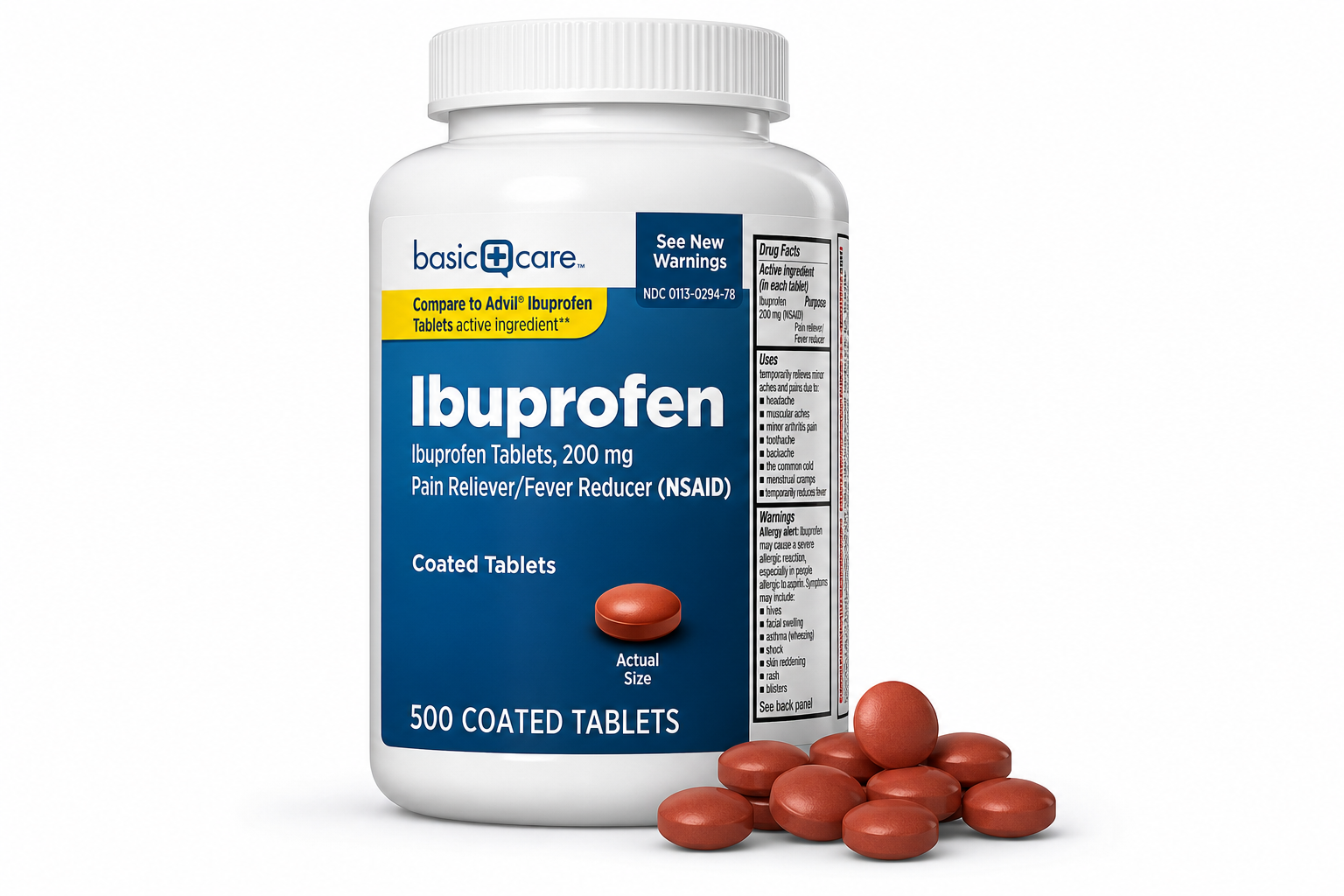
Basic Care Ibuprofen Tablets, 500 Count, is an over-the-counter nonsteroidal anti-inflammatory drug (NSAID) intended for temporary relief of minor aches and pains and for reducing fever. Each tablet contains 200 mg of ibuprofen, the same strength used in many well-known branded ibuprofen products, and is supplied in a single large bottle containing 500 coated tablets.
Positioned as a store-brand alternative, this product targets adults and children 12 years and older who need reliable pain relief for issues such as headaches, muscle aches, backache, menstrual cramps, minor arthritis pain, toothaches, and discomfort associated with the common cold.
From a value standpoint, the large bottle size is designed to minimize how often you need to repurchase. When bought at around $10.39, the cost per tablet is typically lower than that of smaller-count bottles of comparable ibuprofen.
Standout Features
1. 200 mg Ibuprofen per Tablet
Each tablet delivers 200 mg of ibuprofen, a well-established NSAID used to relieve pain and reduce fever.
Key points about the active ingredient:
- Comparable strength to many national-brand ibuprofen tablets.
- Intended for short-term use for common types of pain and fever.
- Typically taken every 4 to 6 hours as needed, within labeled maximum daily limits.
2. Large 500-Count Bottle
One of the most notable aspects of this product is the 500-tablet count.
Benefits of the large size include:
- Fewer repurchases over time for households that regularly use ibuprofen.
- Convenient for stocking a medicine cabinet, office, or shared household.
- Potentially better cost-per-tablet than small or medium-count bottles.
3. Coated Tablet Form
The tablets are film-coated, which serves practical purposes:
- Smoother surface that may make tablets easier to swallow for many users.
- Helps mask the naturally bitter taste of ibuprofen.
4. Broad Use Cases (Within Label Directions)
Within the standard over-the-counter indications, these ibuprofen tablets can be used for a range of common issues:
- Headaches and migraines (mild to moderate)
- Muscle aches and strains
- Minor arthritis and joint pain
- Menstrual cramps
- Toothaches and dental pain (short term until professional care)
- Backache
- Minor aches and pains from the common cold
- Temporary fever reduction
Supporting Features
While the core value lies in the active ingredient and count, several supporting characteristics help define the overall product experience:
- Standard OTC Dosing Guidance: The label provides familiar instructions similar to name-brand ibuprofen, with typical limits like not exceeding the recommended number of tablets in a 24-hour period and limiting self-treatment duration without medical advice.
- Non-Combination Formula: This is a single-ingredient product (ibuprofen only), which can be advantageous if you want to avoid unnecessary additional active ingredients like caffeine or decongestants.
- Child-Resistant Cap: As with most OTC pain relievers, the bottle is typically equipped with a child-resistant closure, which is an important safety feature for homes with children.
- Clear Label Warnings: NSAID-specific warnings (stomach bleeding risk, potential kidney effects, cardiovascular risks, and interactions with other medications) are prominently included, helping users make informed decisions.
Usability
Packaging and Storage
The 500-count bottle is relatively large, so it requires more shelf or cabinet space than smaller packs. For many households, the size is still manageable and can be kept in a standard medicine cabinet or pantry.
Storage guidance typically includes:
- Keep at room temperature in a dry place.
- Protect from excessive heat and moisture.
- Keep out of reach of children.
Tablet Size and Swallowing
Ibuprofen 200 mg tablets are generally small to medium-sized and, with a film coating, are acceptable to most adults in terms of swallowability. People who routinely take tablets of similar strength (like other OTC pain relievers) are unlikely to find these unusually large or difficult to swallow.
Label Clarity
The label usually highlights the following clearly:
- Active ingredient and strength (ibuprofen 200 mg)
- Indications (pain reliever/fever reducer)
- Dosage instructions by age group
- Warnings and when not to use the product
For users accustomed to typical US OTC labels, the layout and language should feel familiar.
Performance
Effectiveness for Pain and Fever
As with other ibuprofen 200 mg products, performance is largely determined by the active ingredient and individual response rather than branding. When used as directed, ibuprofen is widely recognized for:
- Reducing mild to moderate pain from headaches, menstrual cramps, muscle strains, and minor arthritis.
- Lowering elevated body temperature associated with fever.
Users who have previously responded well to other 200 mg ibuprofen tablets can reasonably expect comparable relief from this product, assuming the same dosage and timing.
Onset and Duration
General ibuprofen characteristics include:
- Onset: Pain relief often begins within about 30–60 minutes for many people.
- Duration: Effects may last several hours, contributing to dosing intervals of every 4 to 6 hours as needed.
Individual results can vary based on factors such as whether the medication is taken with food, personal metabolism, and the nature and intensity of the pain.
Safety and Tolerability
Ibuprofen is well-studied, but like all NSAIDs, it carries risks, especially with long-term or high-dose use, or among people with certain medical conditions.
Important considerations include:
- Gastrointestinal risks: Possible stomach upset, heartburn, or more serious issues like stomach bleeding or ulcers, particularly at higher doses or with prolonged use.
- Cardiovascular concerns: NSAIDs may increase the risk of heart attack or stroke, especially with higher doses or long-term use, and in people with existing heart disease or risk factors.
- Kidney function: Ibuprofen can affect kidney function, particularly in people who are dehydrated, have kidney disease, or take certain other medications.
- Drug interactions: Ibuprofen may interact with medications such as blood thinners, certain blood pressure medications, and other NSAIDs.
As always, users should follow the label, avoid exceeding recommended doses, and speak with a healthcare professional if they have underlying conditions, are taking other medications, are pregnant, or need pain relief for more than a few days.
Pros and Cons
Pros
- Same active ingredient and strength as many national brands (ibuprofen 200 mg).
- Large 500-count bottle reduces repurchase frequency, ideal for households that use ibuprofen regularly.
- Competitive per-tablet value, especially when purchased around $10.39 or during promotions.
- Film-coated tablets for easier swallowing and reduced bitterness.
- Single-ingredient formula without added decongestants or caffeine, making it easier to manage drug interactions.
- Widely familiar dosing and warnings, consistent with standard OTC ibuprofen products.
Cons
- Large bottle size may be excessive for users who take ibuprofen infrequently, increasing the chance that tablets approach their expiration date before the bottle is finished.
- NSAID-related risks (stomach, kidney, and cardiovascular concerns) mean it is not suitable for everyone and should not be taken casually or in excess.
- Not appropriate for young children under 12 years in this tablet form; separate pediatric formulations are needed.
- Requires careful storage out of children’s reach, given the high tablet count.
Summary
Basic Care Ibuprofen Tablets, 500 Count, provides a straightforward, no-frills approach to over-the-counter pain relief and fever reduction. With 200 mg of ibuprofen per tablet and a large 500-tablet bottle, it is particularly attractive for households and individuals who rely on ibuprofen regularly and want to minimize the cost and inconvenience of frequent repurchasing.
The product’s strengths lie in its familiar active ingredient, large quantity, coated tablet form, and typically favorable cost-per-tablet when acquired at about $10.39. However, as with all NSAIDs, careful attention to labeling, dosing limits, and individual risk factors is essential. For adults and adolescents 12 and older who tolerate ibuprofen well and need a long-lasting supply, this bottle is a practical and economical option to keep in the medicine cabinet.