

BAND-AID Brand Flexible Fabric Adhesive Bandages (100 Count) Review: Everyday Wound Care That Moves With You
Product Context
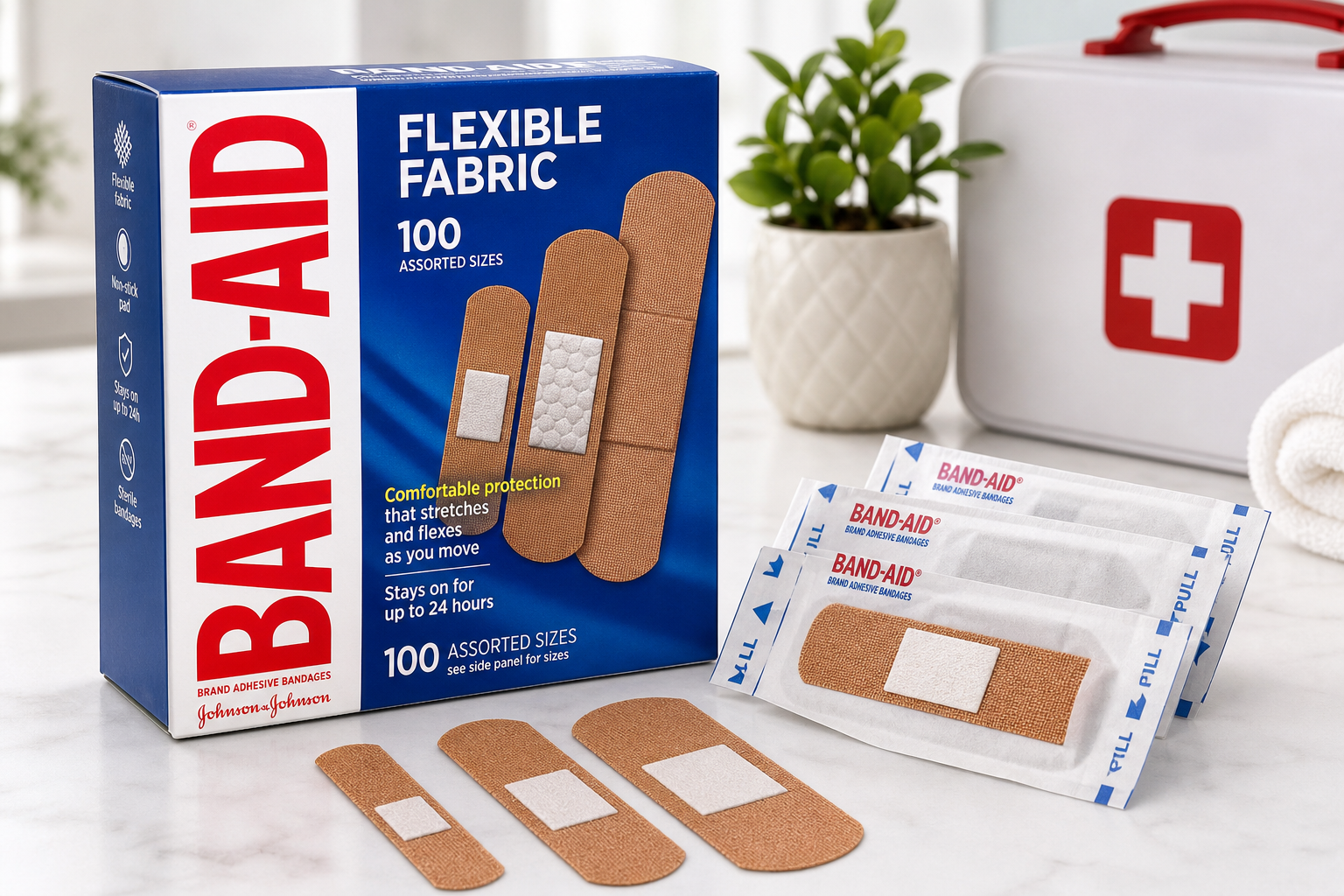
BAND-AID Brand Flexible Fabric Adhesive Bandages in the 100-count assorted sizes box are designed as an all-purpose first-aid staple for treating minor cuts, scrapes, and burns. The product targets households, workplaces, and travel kits where a mix of sizes and a more comfortable, fabric-based bandage is preferred over basic plastic strips.
The flexible fabric construction is marketed to stretch, bend, and move with the skin, making these bandages particularly suitable for joints, fingers, and other high-motion areas. The pack combines multiple strip sizes, so a single box can cover small nicks from kitchen prep, scraped knees, or minor abrasions on elbows and hands without needing separate products.
From a value perspective, the 100-count format is typically positioned as a bulk, everyday option. While exact pricing fluctuates, buyers can generally expect a mid-range cost per bandage, with the Amazon listing often sitting around $8.97 for this size pack.
Feature Breakdown
Flexible Fabric ("Memory Weave") Material
The defining feature is the woven fabric backing. Unlike rigid plastic bandages, the fabric is designed to:
- Stretch and flex with skin movement (especially on knuckles, knees, and elbows)
- Conform more closely to curved or irregular areas
- Offer a softer, less plasticky feel against the skin and clothing
This design aims to reduce the likelihood of edges lifting prematurely, particularly when the user is active or frequently bending the covered area.
Assorted Sizes (100-Count Box)
The 100-count assorted box typically includes several common strip dimensions (for example, approximate widths from narrow fingertip-suitable strips to standard 1" x 3"-class bandages). While exact counts per size can vary by batch and retailer, the intent is to provide:
- Small strips for fingertip nicks, small shaving cuts, or minor punctures
- Medium/standard strips for everyday cuts and scrapes on hands, arms, and legs
- Larger strips for slightly wider scrapes or areas needing more coverage
For most users, this range effectively replaces the need to stock multiple individual boxes for different size requirements.
Non-Stick, Hurt-Free Pad
At the center of each bandage is a sterile pad designed to:
- Cushion the wound to reduce friction and minor impacts
- Wick away small amounts of blood and exudate
- Avoid sticking to the wound bed, enabling gentler removal
This non-stick or “hurt-free” pad is especially helpful for wounds that may need several dressing changes, as it reduces the chances of reopening the injury when removing the bandage.
Adhesive and Edge Design
The adhesive zone runs along both sides of the pad and is tuned for a balance between staying power and skin comfort. Key aspects include:
- Strong initial tack to secure quickly once placed
- Sufficient hold to stay on through typical daily activities (walking, typing, light housework)
- Rounded or tapered edges (depending on size) to help minimize peeling and snagging on clothing
Sterility and Packaging
Each bandage is individually wrapped in a sterile pouch. This ensures:
- Hygienic application straight from the pack
- Portability—individual packets can be carried in wallets, bags, glove compartments, or travel kits
- Compatibility with workplace and institutional first-aid kits that require individually wrapped sterile dressings
Performance Insights
Adhesion and Wear Time
In everyday use, these bandages are built to stay in place for up to a full day under normal conditions. On dry, clean skin, they typically:
- Hold securely for 12–24 hours in low-friction areas
- Perform better than many basic plastic strips on joints and fingers due to the fabric stretch
- Resist edge lifting when the skin flexes, particularly when applied without wrinkles
However, as with most fabric bandages, prolonged exposure to water (swimming, long showers, dishwashing without gloves) will eventually soften the adhesive and lead to early detachment.
Comfort and Breathability
The woven backing allows more airflow than non-breathable plastic bandages, which can contribute to:
- Less skin maceration (white, soggy skin) around the wound
- A more comfortable feel for multi-hour wear
- Better tolerance for sensitive skin compared with some stiffer waterproof products
Users who dislike the clammy sensation of plastic bandages often find the flexible fabric more comfortable for continuous wear.
Protection and Cushioning
The central pad offers adequate cushioning for everyday minor injuries:
- Helps protect against friction from clothing, shoes, or tools
- Reduces the chance of minor bumps reopening a healing cut
- Provides a modest barrier against dirt and everyday contaminants
For moderate abrasions, pairing the pad with a thin layer of topical ointment (as recommended by a healthcare professional) can support a moist, protected healing environment.
Durability During Activity
For routine tasks—typing, walking, light exercise—the bandages generally stay intact. On high-motion, high-friction locations (e.g., finger joints used heavily during manual work), the fabric backing and good conformability provide better persistence than many low-cost alternatives.
Nevertheless, intense activities involving heavy sweating, frequent handwashing, or immersion in water may still require replacement bandages more frequently.
Usability
Application
Applying the bandage is straightforward:
- Clean the wound and surrounding skin thoroughly.
- Dry the area completely (especially critical for good adhesion).
- Select a bandage size that comfortably covers the wound and at least a small margin of intact skin around it.
- Remove the wrapper, peel back the protective strips, and apply the pad directly over the wound.
- Smooth down the fabric, working from the pad outward to the edges.
The flexible backing makes it easier to wrap smoothly over contours and joints without creasing.
Removal
Due to the non-stick pad, removal is usually gentle on the wound itself:
- Peel slowly from one end, keeping the bandage low and close to the skin to reduce pull.
- If adhesion feels strong, moistening the edges with warm water can make removal more comfortable.
Compared with high-tack waterproof bandages, these fabric bandages tend to come off with less discomfort, particularly for children or individuals with delicate skin.
Storage and Organization
The 100-count box is compact enough for home storage yet contains a sufficient variety of sizes to serve as a mini dressing station. Individual sterile wrappers also make it easy to:
- Refill wall-mounted first-aid stations
- Create travel or hiking kits
- Keep a few bandages in everyday carry items (laptop bag, purse, backpack)
Because each bandage is individually wrapped, they are protected from dust, moisture, and incidental contamination until opened.
Trade-offs
Pros
- Flexible, fabric-based design that stretches and moves with the skin, ideal for joints and active users.
- Assorted sizes in a single 100-count box, covering a wide range of minor wounds without needing multiple products.
- Non-stick, hurt-free pad that cushions the wound and reduces pain during removal.
- Better breathability than many plastic or fully waterproof bandages, which can enhance comfort during all-day wear.
- Individually wrapped and sterile, suitable for both home and workplace first-aid kits.
Cons
- Not fully waterproof: prolonged exposure to water can loosen the adhesive, making them less suitable for swimming or frequent dishwashing without gloves.
- Fabric can pick up lint and fibers, especially if edges are exposed or if worn under tight clothing.
- Adhesive strength vs. sensitive skin: while generally balanced, some users with very sensitive skin may still experience mild irritation or prefer hypoallergenic variants.
- Bulk box format: users who need only a few bandages occasionally might see a 100-count pack as more than necessary.
Comparison to Alternatives
Compared with plastic or sheer bandages:
- The flexible fabric offers superior comfort and conformability on moving joints but trades away some water resistance.
- Plastic strips may stay on better in short, wet exposures but can feel stiffer and less breathable.
Compared with thicker “tough strip” or heavy-duty bandages:
- These flexible fabric bandages are more comfortable for everyday minor injuries but may be less rugged for heavy manual labor or prolonged outdoor use.
Conclusion
BAND-AID Brand Flexible Fabric Adhesive Bandages in the 100-count assorted pack are a strong all-around choice for everyday wound care. Their combination of flexible fabric, non-stick hurt-free pad, and multiple sizes makes them especially well-suited for families, offices, and anyone who wants a single, versatile box to handle a wide range of minor cuts, scrapes, and burns.
They are not the best option when long-term water exposure is expected, and users with very sensitive skin may wish to monitor for irritation. However, for typical daily activities—household tasks, office work, school, light exercise—these bandages offer a comfortable, breathable, and reliable solution.
For shoppers seeking a dependable, name-brand bandage that moves with the skin and comes in a generous 100-count box, this product represents a practical, mid-priced choice at around $8.97 for the pack, making it a sensible staple for most first-aid kits.