

Nintendo Joy-Con (L/R) - Neon Red/Neon Blue Review: Versatile Controllers for Nintendo Switch
Introduction
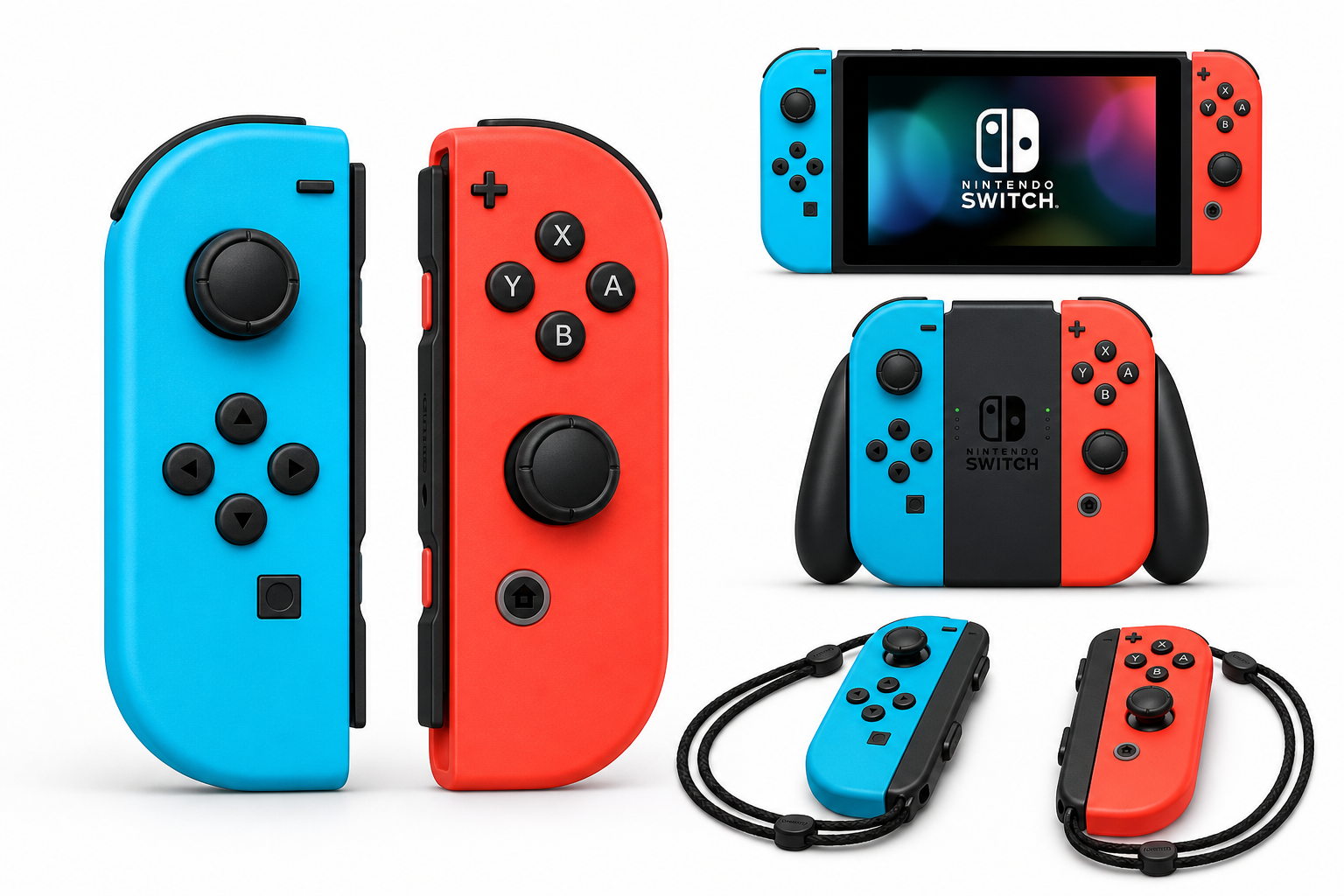
The Nintendo Joy-Con (L/R) - Neon Red/Neon Blue is the standard controller pair designed for the Nintendo Switch. Sold as a left and right controller set, it can be used attached to the console in handheld mode, wirelessly as separate controllers, or combined in a grip. This flexibility makes the Joy-Con pair the core input device for many Nintendo Switch owners.
While alternatives like the Nintendo Switch Pro Controller offer a more traditional gamepad experience, the Joy-Con pair remains the most versatile option, particularly for local multiplayer and motion-controlled games. For buyers comparing options, the official Neon Red/Neon Blue set typically sits at around $89.00 on the product page, depending on ongoing discounts or regional variations.
Typical Use Cases
1. Handheld Mode on Nintendo Switch
In handheld mode, the Joy-Con controllers slide onto the sides of the Nintendo Switch console, creating a compact, portable system. This is often the default way many users play, especially on the go.
Typical activities:
- Playing single-player titles while traveling or commuting
- Short gaming sessions at home without docking the console
- Family members sharing one console in handheld configuration
2. Docked TV Gaming with Joy-Con Grip
When the Switch is docked, the Joy-Con pair can be attached to a grip (sold separately or as part of console bundles) to simulate a more traditional controller layout.
Typical activities:
- Longer play sessions of action, adventure, and platformer games
- Playing from the couch with the console docked to a TV
- Users who prefer a single, unified controller rather than two separate ones
3. Tabletop Mode and Local Multiplayer
In tabletop mode, the Switch stands on a surface while each Joy-Con can be held by a different player. The pair effectively becomes two compact controllers.
Typical activities:
- Spontaneous multiplayer sessions in small spaces
- Party games or competitive titles that support single Joy-Con play
- Traveling scenarios where carrying extra controllers is not convenient
4. Motion-Controlled and Fitness Games
The Joy-Con controllers include accelerometers, gyroscopes, and, in some models, additional sensors, making them suitable for motion-based games.
Typical activities:
- Motion-aiming in compatible shooters
- Fitness and rhythm titles that track controller movement
- Party games that rely on gestures and tilt controls
5. Family and Casual Gaming
Because a single Joy-Con pair can support two players in many games, it is commonly used in family settings.
Typical activities:
- Parent-and-child co-op or versus play
- Casual gaming nights with friends using multiple Joy-Con pairs
- Simple, intuitive motion and button inputs for new players
Performance in Each Scenario
Handheld Mode Performance
In handheld mode, the Joy-Con pair delivers a smooth experience for most users:
- Responsiveness: Inputs are generally quick and accurate for platformers, RPGs, and casual games.
- Ergonomics: The compact width of the Switch with Joy-Cons attached works well for smaller hands. Larger-handed players may find it less comfortable during extended sessions.
- Stability: The sliding rail mechanism keeps the controllers securely attached when properly locked.
Docked TV Gaming with Grip
Using the Joy-Cons in a grip provides a controller-like experience:
- Button Layout: Familiar ABXY and shoulder buttons support most game genres well.
- Analog Sticks: Suitable for most games, though smaller stick caps can feel less precise compared with larger, traditional controllers in high-precision titles.
- Comfort: Acceptable for moderate-length sessions, but dedicated gamepads are typically more comfortable for marathon play.
Tabletop and Local Multiplayer Performance
When used individually, each Joy-Con becomes a compact controller:
- One Joy-Con per Player: Works well for simple, casual games, platformers, and party titles.
- Button Orientation: Sideways usage changes button placement; some players may need time to adjust.
- Comfort: Fine for short to medium sessions, though the small size can be limiting for players with larger hands.
Motion and Sensor Performance
The built-in motion sensors are a key advantage:
- Motion Tracking: Generally accurate for gestures, tilting, and aiming when properly calibrated.
- Rumble Feedback: HD Rumble (where supported) provides nuanced vibration effects for more immersive feedback.
- Game Support: Works particularly well in titles designed around motion input; performance varies in games where motion is secondary.
Connectivity and Battery Life
For wireless use, performance is typically reliable:
- Wireless Stability: Most users experience stable connections at normal living-room distances when the console is placed appropriately.
- Battery Life: The internal battery is designed for extended play sessions, and recharging occurs automatically when attached to the console in handheld or using compatible charging accessories.
Strengths Across Scenarios
-
Versatility of Use Modes
The same Joy-Con pair can be used in handheld mode, as a unified controller in a grip, or as two independent controllers. This flexibility covers a wide range of gaming situations without requiring extra hardware. -
Built-In Motion Controls and Rumble
Integrated motion sensors and HD Rumble enhance gameplay in motion-focused and immersive titles. This is a key advantage over many third-party controllers that may lack such features. -
Instant Local Multiplayer
A single Joy-Con pair can serve two players in compatible games. For households or groups that enjoy spontaneous multiplayer gaming, this is extremely practical and budget-conscious, especially when considering that additional pairs (often priced around $89.00 each) can expand multiplayer capacity. -
Compact and Portable Design
The small form factor makes the Joy-Con pair easy to transport, whether attached to the Switch or carried separately in a case. -
Official Nintendo Compatibility
As first-party controllers, Joy-Cons offer seamless integration with the Nintendo Switch ecosystem, including firmware updates and support from Nintendo.
Limitations Across Scenarios
-
Comfort for Larger Hands
While the compact size is beneficial for portability and smaller hands, players with larger hands may experience fatigue during longer sessions, particularly in handheld mode or when using each Joy-Con individually. -
Analog Stick Durability and Drift Concerns
Over time and heavy use, some users report analog stick drift, where the controller registers input even when the stick is at rest. This can impact precision, especially in games requiring accurate aiming or movement. -
Less Ideal for Long, Intensive Sessions
For extended, high-intensity gaming—especially in action-heavy or competitive genres—many users prefer a more ergonomic, traditional-style controller. The Joy-Con grip is serviceable but not as comfortable as full-sized gamepads. -
Smaller Buttons When Used Sideways
In single Joy-Con mode, the smaller buttons and shifted orientation can be less intuitive and may not be ideal for complex control schemes. -
Pricing Compared to Third-Party Options
As official accessories, Joy-Cons are often more expensive than third-party controllers. While the added functionality and compatibility partly justify the cost, budget-conscious buyers should be aware that the typical price for a new pair tends to stay around $89.00 on the product page.
Verdict
The Nintendo Joy-Con (L/R) - Neon Red/Neon Blue remains the most flexible and essential controller set for Nintendo Switch owners who value versatility, motion controls, and built-in local multiplayer. It excels in scenarios where portability, quick setup, and official compatibility matter most, such as family gaming, party sessions, and on-the-go play.
However, potential buyers should weigh known limitations like possible long-term stick drift, smaller ergonomics for larger hands, and the cost relative to alternative controllers. For players who primarily game in docked mode and favor competitive or lengthy sessions, pairing Joy-Cons with a more traditional controller may be ideal.
Overall, this Joy-Con pair is a strong choice for:
- New Nintendo Switch owners who need a primary controller set
- Families and groups who regularly play local multiplayer
- Users who value motion controls and portability
For those needs, the Neon Red/Neon Blue Joy-Con (L/R) offers a capable, feature-rich controller solution, with pricing typically around $89.00 on the referenced product page, subject to change based on retailer and region.