

Apple AirTag (2nd Generation) Review: Subtle Design, Smarter Tracking
Product Context
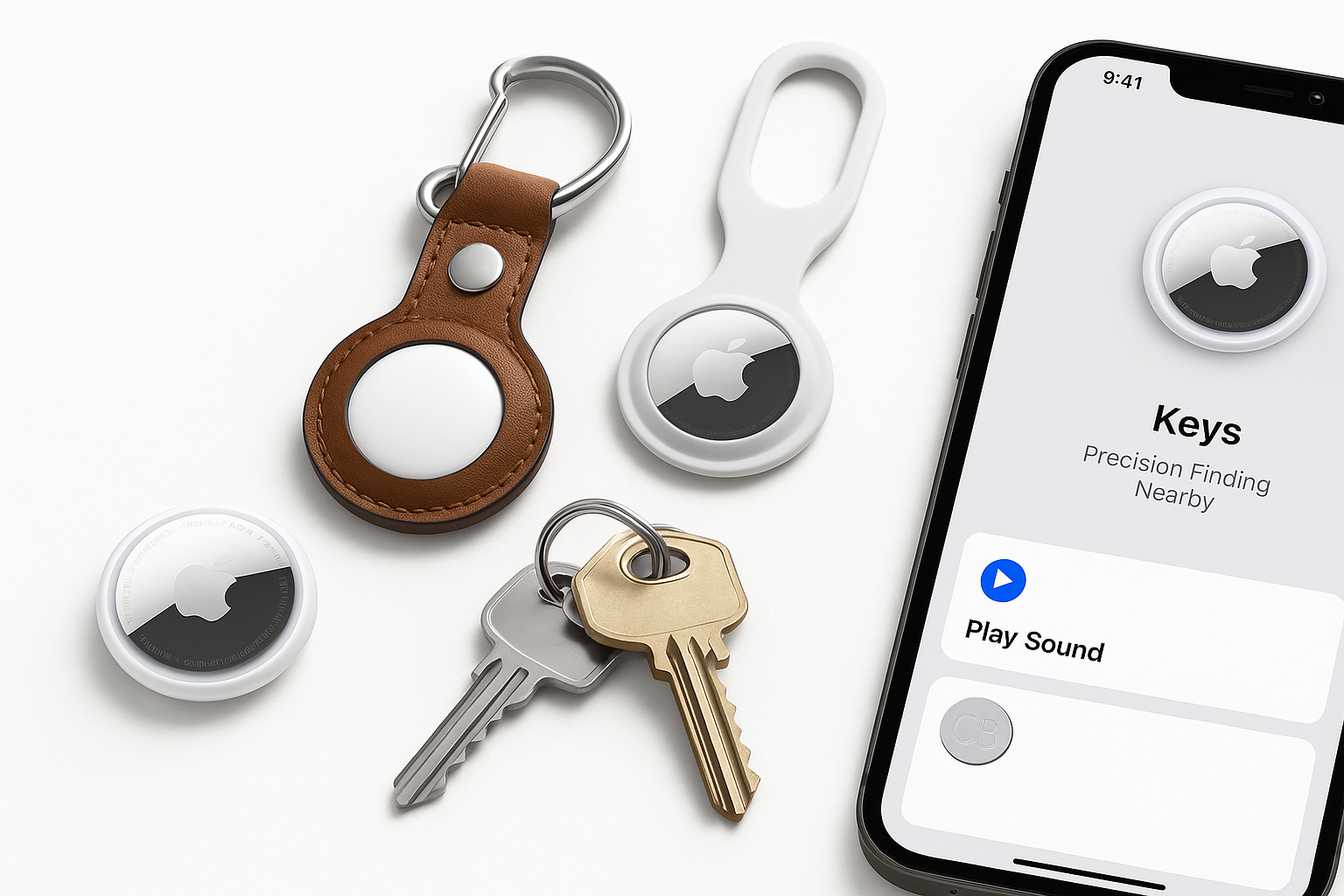
Apple’s AirTag (2nd Generation) is Apple’s latest iteration of its small, coin‑shaped Bluetooth tracker designed to help you keep tabs on everyday items like keys, wallets, backpacks, and luggage. Visually, it’s almost indistinguishable from the original AirTag: a white plastic front, polished metal back, and a compact, key‑fob‑friendly form factor. Under the familiar exterior, however, Apple has upgraded the internal hardware and software support.
The new model centers on an updated Ultra Wideband (UWB) chip, improved Bluetooth performance, and a speaker that Apple rates as up to 50% louder than before. Combined with Apple’s massive Find My network and recent firmware updates focused on unwanted tracking alerts, the 2nd‑gen AirTag is positioned as a more precise, more audible, and safer way to track personal items in the Apple ecosystem.
While pricing will vary depending on retailer promotions, the AirTag (2nd Generation) generally targets the same segment as the original model, with single units and multipacks commonly discounted below the list price on sites like Amazon. Expect to see it frequently available around $24.00 for shoppers comparing it with alternatives from Tile, Chipolo, and other Bluetooth trackers.
Feature Breakdown
Design and build
- Form factor: Compact disc‑like puck about 1.26 inches (31.9 mm) in diameter and 0.31 inches (8.0 mm) thick, small enough to slip into a wallet pocket or attach to a key ring with an accessory.
- Weight: Roughly 0.42 oz (11.8 g), light enough that it doesn’t noticeably weigh down keys or zipper pulls.
- Materials: Plastic enclosure with a metal back. As with the first generation, the metal side is prone to cosmetic scratching over time if carried loose with keys.
- Durability: Rated IP67 for water and dust resistance, meaning it can withstand being submerged in up to 1 meter of water for up to 30 minutes. This is reassuring for rain, splashes, and the occasional puddle mishap.
Internal hardware and connectivity
- Second‑generation Ultra Wideband chip: This is the big internal update. The new UWB chip enables an extended Precision Finding range—up to 1.5x greater than the original—when paired with compatible iPhone and Apple Watch models.
- Bluetooth: Used for general proximity detection and to communicate with nearby Apple devices in the Find My network.
- NFC: Allows someone who finds your lost item to tap the AirTag with an NFC‑capable smartphone to access your contact details when it’s in Lost Mode.
- Sensor: Includes an accelerometer to help the AirTag understand movement, aiding in power management and responsiveness.
Audio and alerts
- Louder built‑in speaker: The 2nd‑gen model’s speaker can be up to 50% louder, making it easier to hear in a noisy room, buried in a couch, or inside luggage. This is one of the most noticeable real‑world improvements over the original model.
- Refined unknown‑tracker alerts: Firmware updates now focus on clearer, more distinct alerts when an unknown AirTag is moving with you, aimed at reducing misuse for unwanted tracking.
Battery and power
- User‑replaceable CR2032 battery: Like the original AirTag, this model uses a standard coin cell battery that users can replace by twisting off the back cover.
- Expected life: Apple rates the battery at “more than a year” of everyday use, assuming typical use patterns (occasional Precision Finding and audio pings, regular passive tracking via the Find My network).
Software and ecosystem requirements
- Find My integration: AirTag (2nd Generation) is tightly integrated into Apple’s Find My app on iPhone, iPad, and Mac. The app’s “Items” tab is where you rename your AirTag, assign it to an object, and track it on a map.
- OS compatibility: Requires an Apple Account plus an iPhone with a recent version of iOS or an iPad running the corresponding iPadOS. Some of the newest Precision Finding enhancements and sharing options are only available on the latest iOS/iPadOS generations and recent hardware.
- Sharing: AirTag can be shared with multiple family members so that everyone can help track commonly used items like car keys, strollers, or shared luggage.
Privacy and safety features
- Encrypted, anonymous location relays: Devices participating in the Find My network relay AirTag locations anonymously and with end‑to‑end encryption, so even Apple cannot see the precise location history tied to your identity.
- Unwanted tracking detection: iPhone users receive alerts when an AirTag that’s not theirs appears to be traveling with them. Similar alerts are also supported on many Android phones via joint Apple–Google specifications, making the system more broadly protective than at launch.
- Sound cues for unknown tags: If an unknown AirTag keeps moving with you for a period of time, it will emit a sound so it can be physically located and disabled.
Performance Insights
Precision Finding and range
The headline upgrade with the second‑generation AirTag is its expanded Precision Finding range. When paired with a compatible iPhone or Apple Watch that also supports the latest UWB features, the AirTag can be located from farther away with on‑screen directional arrows, distance measurements, and haptic feedback.
In practice, this translates to a few key improvements:
- Earlier lock‑on: You can start Precision Finding from a greater distance than with the original AirTag, particularly helpful when searching through a parking lot or large room.
- More stable direction cues: The directional arrow and distance indicator tend to “snap” onto the correct path more quickly, reducing the wandering effect sometimes seen in the first generation.
- Better performance in cluttered spaces: UWB is more resilient to interference than Bluetooth alone, so the new chip helps maintain a more consistent sense of direction and distance indoors.
Audibility and sound profile
The louder speaker meaningfully affects how easy it is to recover an item once you’re nearby. When you trigger a sound from the Find My app, the AirTag emits a more prominent chime that is easier to hear through fabric, inside cushions, or from a suitcase sitting on a busy baggage carousel. While the small housing still limits low‑frequency sound, the increased volume and clearer tone make a practical difference in real‑world retrievals.
Find My network reliability
AirTag’s real strength remains Apple’s vast Find My network. Because hundreds of millions of iPhones, iPads, and Macs participate in encrypted, anonymous location relays, a lost AirTag in a public space is often “seen” quickly by someone’s device and updated on your map.
This makes the AirTag particularly effective in dense urban and suburban environments where Apple devices are common. In sparsely populated rural areas with fewer Apple users, tracking intervals can be longer and less precise.
Battery life over time
CR2032 coin cells are inexpensive and widely available. Under typical usage, most users should get around a year of service before receiving a low‑battery notification in the Find My app. Replacing the battery is straightforward—twist off the metal back, swap the cell, and twist to close—though care is needed to ensure the gasket remains properly aligned for water resistance.
Usability
Setup experience
One of the major selling points of AirTag, and still true with the 2nd generation, is the setup process:
- Pull the tab to activate the battery and power on the AirTag.
- Bring it close to your iPhone or iPad.
- A setup card pops up automatically; tap to connect.
- Assign a name or preset label (e.g., “Keys,” “Wallet,” “Backpack”).
This one‑tap pairing process is considerably smoother than many third‑party trackers that require scanning QR codes or creating separate accounts.
Day‑to‑day usage on different items
- Keys and keychains: Probably the most common use case. Because the AirTag has no built‑in key ring hole, you’ll need a holder or key ring accessory. Once attached, it works well for both at‑home misplacements and finding keys in bags or under piles of mail.
- Wallets: The round, slightly thicker shape isn’t as ideal as a dedicated card‑style tracker, but it can fit in larger wallets or money clips. For minimal wallets, a slim case or dedicated wallet accessory is almost required.
- Bags and backpacks: Tossing an AirTag into an interior pocket gives you good coverage for daily carry bags, camera bags, or laptop backpacks. Precision Finding and audio chimes are especially helpful in crowded spaces or when bags get mixed up.
- Luggage: In checked baggage, AirTag excels as a rough locator—helping you confirm whether your suitcase made it to your destination airport and whether it’s approaching baggage claim. It’s not a live GPS tracker, but many travelers find the periodic updates and chimes reassuring.
Software interface and notifications
Within the Find My app, the AirTag shows up under “Items,” with options to:
- Play a sound.
- Use Precision Finding (when nearby and supported by your device).
- View the current or last‑seen location on a map.
- Enable “Notify When Left Behind” for items you don’t want to forget.
- Put the AirTag into Lost Mode, which allows someone who finds it to see your message and contact details.
The app is fairly intuitive, and Apple’s familiar map interface makes it easy to see where and when the tag was last detected.
Accessibility considerations
AirTag benefits from the broader accessibility features of iOS and the Find My app, including:
- VoiceOver narration of on‑screen directions.
- Larger text options.
- Support for braille displays.
Combined with audio and haptic feedback during Precision Finding, these tools make AirTag a viable locator option for users with visual impairments.
Trade-offs
Despite its strengths, the Apple AirTag (2nd Generation) isn’t perfectly suited to every scenario.
Pros
- Deep Apple ecosystem integration: Seamless setup and tight coordination with iPhone, iPad, Apple Watch, and Mac make it one of the most user‑friendly trackers for Apple users.
- Improved Precision Finding: Extended range and more stable UWB guidance compared with the first‑generation model.
- Louder speaker: Materially easier to hear in real‑world conditions, especially in bags or under cushions.
- Robust Find My network: Excellent coverage in Apple‑dense regions, giving it an edge over many competing Bluetooth trackers.
- User‑replaceable battery: No need to send the device back or replace the entire tracker when power runs low.
- Enhanced safety features: Ongoing firmware updates and cross‑platform alerts improve detection of unwanted tracking.
Cons
- Apple‑only setup and best features: You need an iPhone or iPad to set up the AirTag, and full Precision Finding relies on relatively recent Apple hardware and OS versions.
- No built‑in attachment point: Requiring an accessory for keys or lanyards adds cost and a bit of bulk.
- Not a GPS tracker: Location updates depend on proximity to other Apple devices; for tracking vehicles in remote areas or backcountry gear, a true GPS or satellite tracker is more appropriate.
- Form factor limitations for wallets: The round, slightly thicker design is less ideal than credit‑card‑shaped tags for slim wallets.
- Ecosystem lock‑in: If you or your family use mixed platforms (iOS and Android), cross‑platform trackers might be more convenient.
Conclusion
The Apple AirTag (2nd Generation) is a thoughtful, if conservative, update to a popular product. The design and core concept remain the same, but the addition of a newer Ultra Wideband chip, a noticeably louder speaker, and continued privacy‑oriented firmware updates make it more capable and more reassuring to use than the original.
For iPhone and iPad owners who frequently misplace keys, bags, or everyday essentials, the AirTag (2nd Generation) offers a polished, highly integrated tracking experience that leverages the scale of Apple’s Find My network. If you already own first‑generation AirTags that are working well, this isn’t a mandatory upgrade, but anyone buying their first Apple tracker—or expanding their collection—will benefit from the 2nd‑gen improvements, especially when shopping at promotional pricing around $24.00.
If you live fully inside the Apple ecosystem and want a simple, set‑and‑forget way to keep track of your most important items, the AirTag (2nd Generation) is one of the most compelling Bluetooth trackers currently available.