

FITRELL 3 Pairs 20–30mmHg Compression Socks Review: Everyday Circulation Support on a Budget
What This Product Is
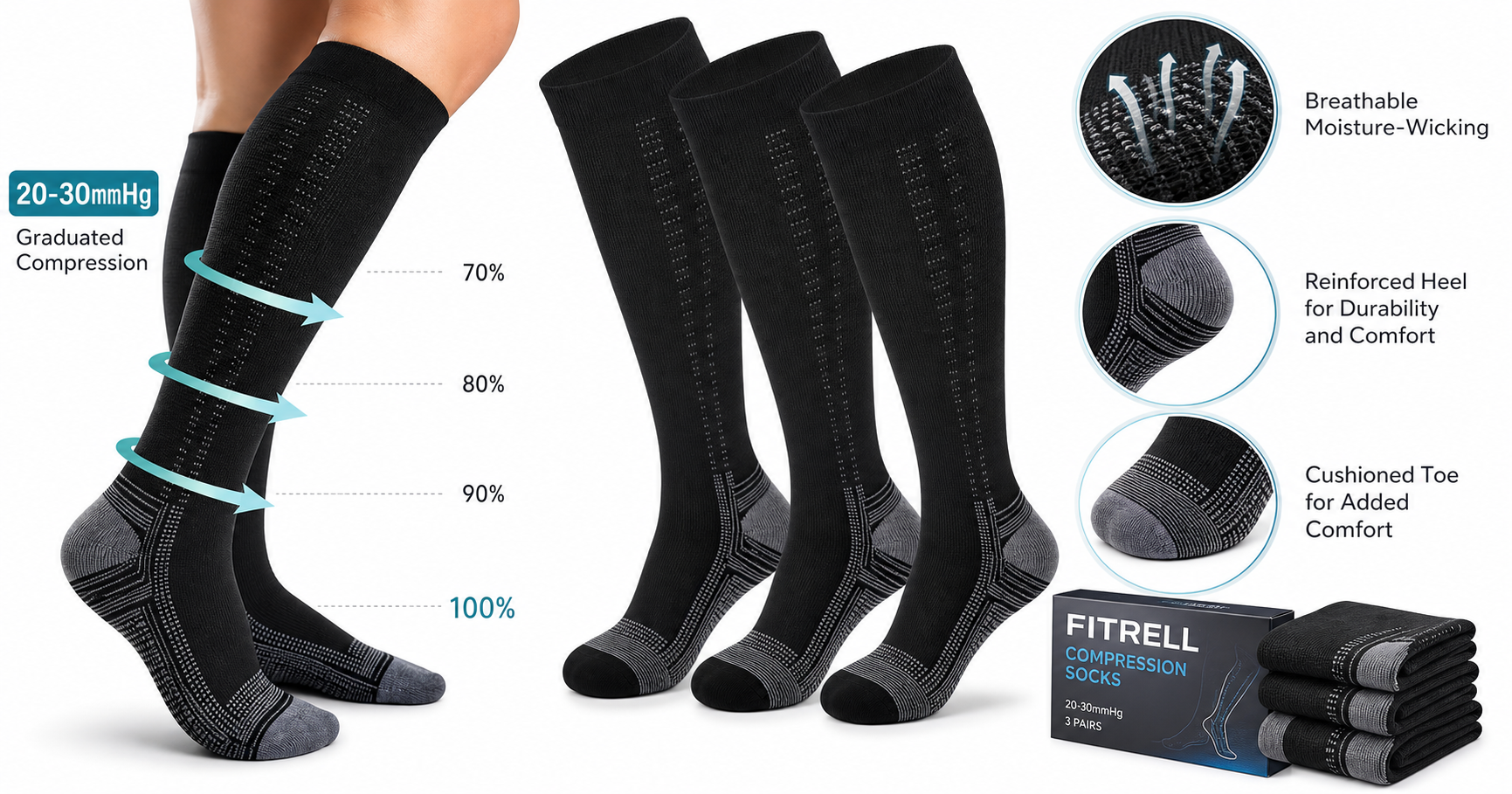
The FITRELL 3 Pairs Compression Socks for Women and Men 20–30mmHg are knee‑high, unisex compression socks sold in a multi‑pair pack designed for daily circulation and muscle support. Each pair provides graduated compression in the 20–30mmHg range, which is considered a moderate, often "medical‑grade" level suitable for managing mild to moderate swelling, supporting venous return, and aiding recovery after activity.
Key design elements typically include:
- Knee‑high length for full calf coverage
- Graduated compression that is tighter at the ankle and gradually decreases up the leg
- A synthetic, moisture‑wicking fabric blend for breathability and quick drying
- Reinforced or cushioned heel and toe areas to enhance comfort and durability
- Multiple size options (commonly S/M and L/XL) to fit a wide range of calf circumferences and shoe sizes
They’re marketed as versatile socks appropriate for travelers, runners, nurses, office workers, and anyone who spends long hours on their feet or sitting still.
From a value standpoint, you get three pairs in a single pack, and the overall cost for the bundle is often around $14.99, which is competitive with many other budget‑ to mid‑range compression sock options.
Why It Matters
Compression socks are widely used to support circulation and reduce leg fatigue. When you stand or sit for long periods, blood can pool in the lower legs, leading to swelling, soreness, or a feeling of heaviness. Graduated compression applies more pressure at the ankle and less toward the knee, which can help push blood back toward the heart and reduce these symptoms.
A 20–30mmHg range is particularly meaningful because:
- It is strong enough to provide noticeable support for mild varicose veins, edema, and tired legs.
- Many people find it suitable for daily wear during long shifts, flights, or recovery after exercise.
- It is often recommended as a starting point for users who need more than light (15–20mmHg) compression but don’t require the higher 30–40mmHg range typically used for more serious venous issues, which usually need medical guidance.
By packaging three pairs together at a modest per‑pair cost (approximately $14.99 for the full set), FITRELL aims to make regular compression‑sock use more accessible. Having multiple pairs makes it easier to rotate socks, keep a clean pair ready, and maintain consistent compression use, which often matters more than any individual premium feature.
Key Advantages
1. Effective 20–30mmHg Graduated Compression
The central benefit is the moderate 20–30mmHg graduated compression, designed to:
- Boost venous return and help limit blood pooling in the lower legs
- Reduce or prevent ankle and calf swelling over the course of a day
- Provide supportive pressure for muscles, which can reduce fatigue during long shifts or workouts
- Support post‑activity recovery for runners or athletes by lightly compressing muscles and promoting circulation
Users who step up from non‑compression or low‑compression socks typically report feeling less heaviness, reduced aching, and improved comfort after long periods of standing or sitting.
2. Versatile Use Cases
These socks are positioned as a multi‑purpose solution:
- Healthcare and service workers: Nurses, retail staff, and hospitality workers who stand or walk for hours can benefit from reduced leg fatigue.
- Office workers and remote workers: Sitting for extended periods can be just as hard on circulation; compression helps counteract that.
- Travelers: On long flights or car rides, compression socks can help reduce swelling and the discomfort of cramped positions.
- Runners and gym users: Some athletes use 20–30mmHg socks during training or afterward to support recovery, especially for calves prone to soreness.
Because they’re unisex, a household can sometimes share a pack as long as calf circumference and shoe sizes align with the size chart.
3. Moisture‑Wicking and Breathable Fabric
The FITRELL socks use a synthetic performance blend (typically including nylon and spandex) intended to:
- Wick away moisture so feet stay drier during long wear
- Provide enough stretch for a snug but not suffocating fit
- Dry faster after washing than cotton‑heavy socks
Combined with mesh‑style knit zones (on many variants), this helps manage heat build‑up, which is a common complaint with thicker compression garments.
4. Reinforced Cushioning and Seam Design
Many compression socks can feel thin and clinical. FITRELL adds cushioned soles and reinforced heels/toes to improve comfort, especially for:
- Users who are on hard floors for much of the day
- Runners who appreciate a bit of extra padding
Seam placement and construction are also designed to minimize friction and hot spots, reducing the risk of blisters while still fitting inside standard footwear.
5. Value of a 3‑Pair Pack
Value is one of FITRELL’s biggest selling points. A three‑pair bundle around $14.99 effectively lowers the per‑pair cost compared with many single‑pair medical brands.
Practically, this means you can:
- Rotate pairs to extend overall lifespan
- Keep a pair dedicated to work, another to exercise, and a third as backup
- Test whether 20–30mmHg compression works for you without a large upfront investment
Key Limitations
1. Sizing Can Be Tricky
Like most compression garments, fit is critical. If the socks are too loose, you won’t get effective compression; too tight, and they may be uncomfortable or difficult to put on.
Potential sizing issues include:
- People with very wide calves or very small ankles may find standard S/M and L/XL sizes don’t align well.
- Taller users or those with long legs may find the socks sit slightly below the desired knee height.
- Users between size ranges may need to experiment with sizing, and some may experience either excess tightness or slight slippage depending on leg shape.
Reviewers commonly recommend measuring calf circumference and shoe size carefully and following the size chart closely, rather than guessing based on shoe size alone.
2. Moderate, Not Heavy‑Duty Medical Support
The 20–30mmHg range is a solid moderate option, but it is not a substitute for specialized medical compression when:
- You have serious venous insufficiency, diagnosed deep vein thrombosis (DVT), or post‑surgical needs that might require custom‑fit or higher‑compression hosiery.
- A healthcare professional has specifically prescribed a different compression level or premium medical brand.
FITRELL’s socks are best seen as an accessible, general‑purpose solution rather than a clinical‑grade product tailored for complex medical conditions.
3. Durability vs. Premium Brands
While the socks offer good value, they are still in the budget to mid‑range tier. Over time, users may notice:
- Loss of elasticity if washed and dried aggressively (high heat or rough cycles)
- Thinning or pilling in high‑friction zones with heavy use
Careful washing (gentle cycle, cold water, air‑drying) can extend their life, but extremely heavy or daily use may eventually justify upgrading to more expensive, long‑lasting medical brands if you find compression indispensable.
4. Not Ideal for Very Hot Climates or Heat‑Sensitive Users
Despite breathable fabric, any knee‑high compression sock adds an extra thermal layer. In very hot, humid conditions or for users who run warm, these may still feel too warm for all‑day wear, especially inside closed shoes.
Who It’s For
The FITRELL 3 Pairs Compression Socks are a strong fit for users who:
- Stand or walk for long periods at work (nurses, hospital staff, teachers, retail, warehouse, hospitality)
- Sit for extended stretches, such as office workers, drivers, or frequent flyers
- Exercise regularly, particularly runners and walkers who want light‑to‑moderate calf support and post‑workout recovery help
- Experience mild to moderate swelling, achiness, or varicose‑vein discomfort and want to try compression socks without committing to expensive brands
- Want multiple pairs for rotation while keeping overall cost down (roughly $14.99 for three pairs at the time of writing)
They’re also suitable for users who are new to compression socks and want to experiment with a commonly recommended compression level before deciding if they need more specialized solutions.
Who Should Skip It
You may want to look elsewhere if:
- You have a prescription or recommendation for a specific medical‑grade brand or different compression level (e.g., 30–40mmHg) due to advanced venous disease, post‑surgical needs, or complex medical conditions.
- Your calf or ankle measurements fall far outside standard ranges, making off‑the‑shelf S/M or L/XL products difficult to fit comfortably.
- You require open‑toe, thigh‑high, or pantyhose‑style compression garments, which this product does not provide.
- You live in a very hot climate and already know that knee‑high socks are intolerably warm for most of the year; in that case, lighter or shorter options might be more comfortable.
- You prioritize maximum durability over upfront cost, in which case higher‑priced medical brands may offer better long‑term elasticity and fabric resilience.
Final Recommendation
The FITRELL 3 Pairs Compression Socks for Women and Men 20–30mmHg deliver credible, everyday compression support at a budget‑friendly price. With a moderate 20–30mmHg compression level, a moisture‑wicking synthetic blend, and a cushioned knee‑high design, they are well‑suited to people who stand, walk, or sit for long hours and want to reduce swelling and fatigue.
They are not a replacement for specialized medical hosiery in complex clinical scenarios, and users with unusual leg proportions or very sensitive skin may need to experiment with fit. However, for most people seeking a practical, multi‑pair starter set of compression socks, FITRELL’s offering hits a compelling balance of performance, comfort, and value.
If you’re curious about whether 20–30mmHg compression can make your workday, travel, or training sessions more comfortable, this three‑pair pack at around $14.99 is an accessible, low‑risk way to find out.