

Cabin Air Filter with Activated Carbon for Honda & Acura: Broad Compatibility, Cleaner Cabin Air
Quick Summary
The Cabin Air Filter with Activated Carbon for Honda Accord 2003–2022, Civic 2006–2015, CR-V 2007–2016, Odyssey 2005–2017, Pilot 2009–2022, Ridgeline 2006–2025, Acura MDX 2007–2020 and more is a broad-fit replacement cabin filter aimed at owners who want better interior air quality and some odor reduction without paying dealership prices.
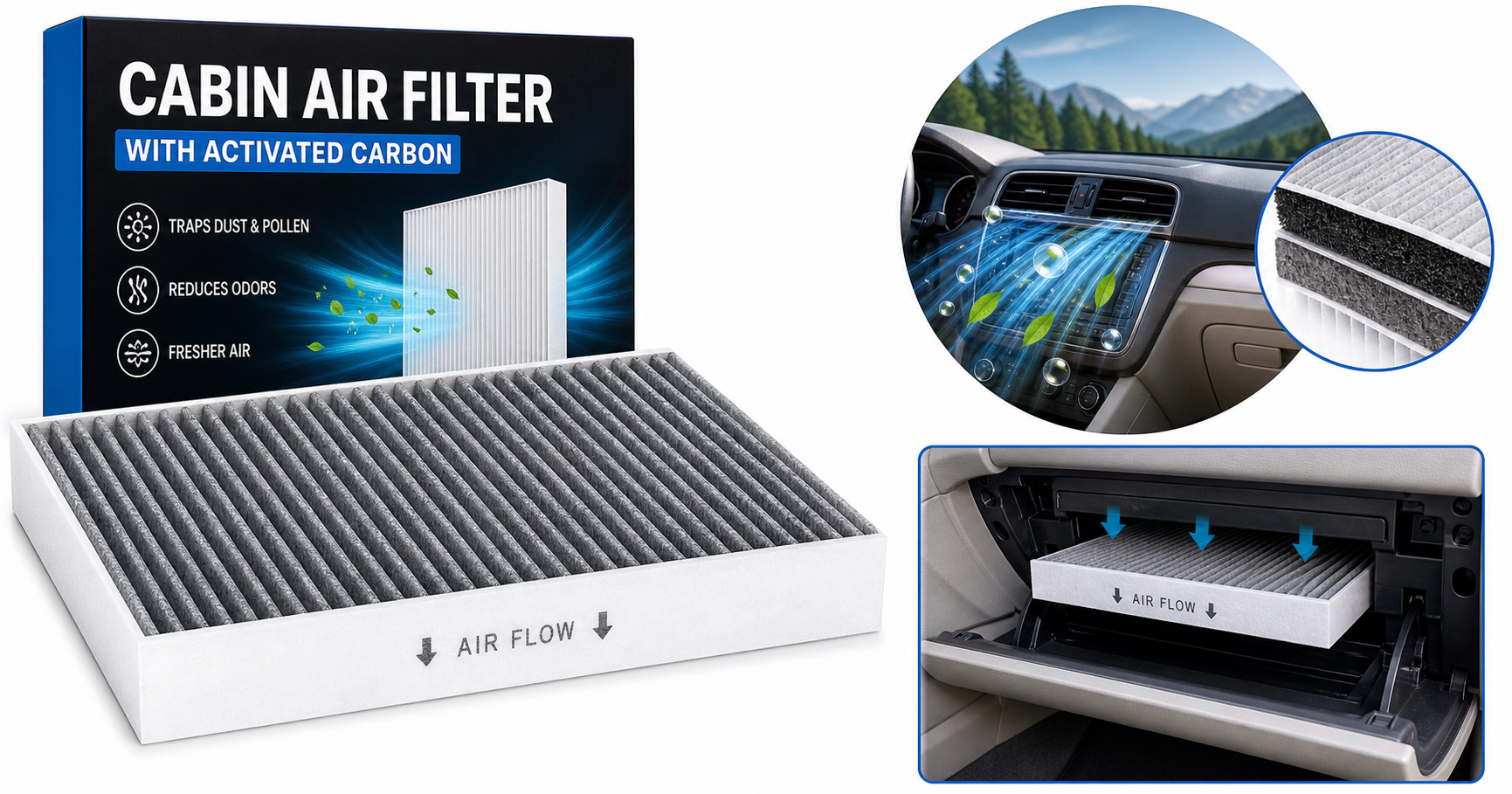
Instead of a basic paper or synthetic media, this filter integrates activated carbon. That design is typically used to trap not just dust and pollen, but also some exhaust fumes and cabin odors, which can be especially useful for commuters in traffic or drivers who frequently encounter smoke or industrial smells.
It’s intended as a drop-in replacement for the OEM cabin filter in many popular Honda and Acura models. For most vehicles on the fitment list, installation is a straightforward DIY job that can usually be done with simple hand access behind the glove box. Pricing is competitive in the aftermarket segment, with this filter commonly sold in the $7.99 range depending on retailer promotions.
Detailed Analysis
Design and Construction
This cabin air filter follows the standard rectangular, pleated-panel design used by Honda and Acura in the listed model years. The key differentiator is the multi-layer media with activated carbon:
- Primary particulate layer – captures larger debris such as dust, pollen, and road grit.
- Fine filtration layer – targets smaller particulate matter, including finer dust and some allergens.
- Activated carbon layer – a dark layer infused with carbon granules or carbon-impregnated fibers intended to adsorb certain gases and odors from the air stream.
Compared with a basic white-paper OEM-style filter, the carbon layer adds modest weight and a darker appearance. In most cases, airflow resistance remains within what the HVAC system is designed to handle, so users should not notice a meaningful drop in fan performance when replacing a clogged old filter with a new carbon unit.
Compatibility and Fitment
The standout feature of this product is its broad compatibility across multiple Honda and Acura platforms spanning more than a decade:
- Honda Accord: approximately 2003–2022
- Honda Civic: roughly 2006–2015
- Honda CR-V: about 2007–2016
- Honda Odyssey: around 2005–2017
- Honda Pilot: about 2009–2022
- Honda Ridgeline: about 2006–2025
- Acura MDX: approximately 2007–2020
The filter is designed to match the OEM dimensions for the cabin filter housing used in these vehicles. In practice, that typically means:
- Correct outer dimensions so the filter slides into the slot without forcing.
- A foam or gasket edge (if provided) that helps seal against the housing to prevent unfiltered bypass air.
- Direction-of-airflow arrows printed on the frame to guide correct installation orientation.
Because Honda and Acura often reuse filter sizes across multiple platforms and generations, a single part number can legitimately cover many years and trims. Still, it’s wise for buyers to double-check fitment by verifying their exact year, model, and trim against the vendor’s compatibility chart before ordering.
Filtration Performance and Activated Carbon
A cabin air filter’s primary job is to keep the air that enters the passenger compartment cleaner, especially when using the HVAC system in fresh-air mode. This carbon filter is engineered to address two main categories of contaminants:
- Particulates – such as pollen, dust, and soot from other vehicles. The pleated design increases surface area, helping the filter capture more particles while maintaining airflow.
- Gaseous pollutants and odors – activated carbon can adsorb certain volatile organic compounds (VOCs), exhaust fumes, and common urban odors. This can translate into a less pungent cabin environment when driving near diesel trucks, in dense traffic, or through smoke and industrial areas.
While the activated carbon element is not a substitute for a medical-grade HEPA setup, it does offer a noticeable improvement over bare paper filters in many real-world scenarios, particularly for drivers sensitive to odors.
Durability and Service Interval
Cabin filters naturally load up with dust and contaminants over time. Most automakers recommend replacing the cabin filter roughly every 12 months or 12,000–15,000 miles under normal driving conditions, and more often in dusty or high-pollution environments.
For this activated carbon filter, following a similar interval is reasonable. As the media becomes saturated with particles and the carbon gradually loses adsorption capacity, users may notice:
- Reduced HVAC airflow at the same fan speed.
- A return of outside odors that were previously muted.
- Visible discoloration and debris when the filter is inspected.
Because of the relatively low cost of the component compared with dealer service charges, many owners opt to replace it proactively at or before the recommended interval.
User Experience
Installation
On the majority of compatible Honda and Acura vehicles, replacing the cabin air filter is a straightforward DIY task that usually involves the following steps:
- Accessing the glove box: Open it and either squeeze the sides inward or remove a small damper arm so the box can drop down and expose the filter housing.
- Removing the old filter: Release the retaining clips on the filter door, slide out the old filter, and note the airflow direction markings.
- Inserting the new filter: Align the new carbon filter with the airflow arrows and slide it into the housing, ensuring a snug fit with no buckling.
- Reassembling: Clip the cover back on and return the glove box to its normal position.
Most users with basic hand dexterity and a few minutes of time can complete this process without tools or special equipment.
Day-to-Day Use
Once installed, there is nothing to adjust or maintain between replacement intervals. The user experience is entirely passive but can be summarized as:
- Cleaner-feeling air: Reduced dust on interior surfaces and less of the outside-smell intrusion during typical driving.
- Odor moderation: Exhaust, mild industrial odors, or roadside smoke may be less intense inside the cabin than with a non-carbon filter.
- Maintained HVAC performance: When replaced on schedule, the filter should allow the blower motor to move plenty of air through the vents on all fan speeds.
Most benefits are incremental rather than dramatic; however, individuals with allergies or sensitivity to smells may notice the improvements more readily.
Pros
- Wide compatibility across many years of Honda and Acura vehicles, simplifying product selection for multi-vehicle households.
- Activated carbon layer to help reduce odors and certain gaseous pollutants compared with plain paper filters.
- Standard pleated design that fits factory housings and supports good airflow when new.
- DIY-friendly installation on most supported models, often requiring no tools.
- Cost-effective maintenance item, especially when compared with dealership filter pricing and labor charges.
- Regular replacement improves comfort, helping keep dust and debris from circulating inside the cabin.
Cons
- Performance is still limited by form factor—it is not a HEPA system and cannot fully eliminate fine particulates or all smells.
- Activated carbon effectiveness diminishes over time, so benefits are tied closely to regular replacement.
- Broad fitment may mask edge cases where specific trims or special-edition models use a different filter size; buyers have to confirm exact compatibility.
- Some drivers may not notice a major difference compared with a fresh, high-quality non-carbon filter, especially in low-pollution areas.
Value Assessment
From a value standpoint, this Cabin Air Filter with Activated Carbon sits in a favorable position:
- The upfront cost—typically around $7.99—is modest for a maintenance item that directly affects daily driving comfort.
- DIY installation avoids labor costs, making it a quick upgrade compared with paying a dealership or shop.
- The addition of activated carbon offers potential odor reduction at a price that is often comparable to or only slightly higher than standard paper filters.
For owners of compatible Honda and Acura vehicles who want to balance cost, ease of use, and improved cabin air quality, the filter represents strong overall value. It is particularly appealing if you regularly drive in heavy traffic or polluted environments where odor control makes a noticeable difference.
Final Thoughts
The Cabin Air Filter with Activated Carbon for Honda Accord, Civic, CR-V, Odyssey, Pilot, Ridgeline, Acura MDX and related models is a practical upgrade over basic paper filters. It retains the straightforward installation and fitment of an OEM-style part while adding carbon-based odor adsorption that can enhance comfort on every drive.
If you own one of the supported Honda or Acura vehicles and are due for a cabin filter replacement, this product is a sensible option to consider. As long as you verify compatibility for your exact model year and commit to replacing it at regular intervals, it offers a simple, cost-effective way to keep your vehicle’s interior air fresher and more pleasant.